This is software (AWS) generated transcription and it is not perfect.
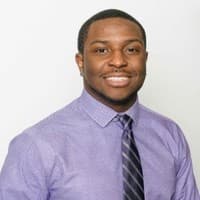
Yeah. My name is Willie Roberson. I am currently an Associate Director at the Glover Park Group. As far as digital campaigns are concerned, that's my avenue. How I got to this point, goodness it's a really long arduous question. I was born in Jersey, actually grew up in Central Jersey about five minutes and Princeton in 15 minutes from Rutgers. I wanted to build roller coasters. And then, in 2008 I saw a man by the name of Barack Obama become president. After that, I knew that I wanted to go to Washington D. C. and impact young people's lives. You know, change and use language and rhetoric and digital strategy. You know, at that time, President Obama was using using Facebook to reach out to voters, and I knew that technology was the cutting edge to get messaging and things out. So I went to University of Rochester, um, to study science, that legal studies degree, I also play football, recruited to play football at the university Rochester. It's our student athletes there balancing books and athletics, which taught me a lot of responsibility and time and time management. Goodness is faras things that have shaped, Michael, I would say, really having jobs on campus. So I worked out the help motion office at the University of Rochester, and I did all of the social media content for this health office at at University Rochester. That gave me sort of a foray into sort of plugging in my personal experience on social media and marrying that up with the professional. And after having a few jobs on campus doing social media, I got an internship at the Leadership Conference on Civil and Human Rights in Washington, D. C. And I knew I wanted to come to Washington, D. C. To do that work to really impact people's lives. And I was doing social media content creation and really marrying up the policy, you know, conversations at the time with the conversation that we're having on social media, and I was able to tell stories, video clips, share graphics and things of that nature, all in the hopes of trying to connect and for a connective voters. And so after that internship, I got a job on a political campaign in South Brunswick, actually, actually, the third Congressional District of New Jersey, a little farther south in New Jersey. And so I was working on a political campaign for about a year in 2014 was a hard year for Democrats, so we lost. But I parlayed that opportunity into a political consultancy job in Washington, D. C. At the D. C. I group on. Then I worked for a couple of years as a project manager. There, worked my way up associate manager, things like that. And in 2016 you know, a man by the president. Trump got elected, and I wanted to use my skills for good. And I shifted gears. And I worked to get hired at Revolution Messaging, which is a progressive policy shop digital communication shop in Washington, D. C. Most notably known for empowering campaigns like Bernie Sanders, Elizabeth Warren, Alexandria, Cossio, Cortez and the like. So I worked there for a bit of sometime, gained some digital policy shop chops and digital strategy chops, and then was able to work and get myself over to a global park group where I am currently, um, so a lot of these experiences, like I said, shaped my career path that I would say, You have a job on campus that sort of opened my eyes towards, you know, the impact, the power that I could use my strategy Teoh work and then also having internships while at college as well.
so I'm very lucky and very blessed to be able to do my job home. Currently long I have a computer in a contained you, sadly, at my nominee. No, course I'm able to work from any that is it for the Corona virus hit before the pandemic. You know, we were working pretty much out of the office exclusively and things of that nature. But the responsibilities that someone has in my position as associate director at the digital strategy at the global part group, my job is candidly to put together a strategy for clients. So we worked with Fortune 500 Fortune 50 companies as well as not large, not office. And my job is to corral them with different memos, different memos regarding digital strategies for social media content, advertising, just content creation, making sure that their brand is marrying up with whatever you know, certain campaigns that they're looking to push out there. And so again, I worked together with my team. I have a team under me of associates and senior associates and interns that helped me draft the content. I review the content I package it up and materials that I send over to our clients, and I'm sort of the primary client lied for a majority of my clients. There are other clients where there are vice presidents and even managing directors on accounts where they operate in a certain capacities for strategic communications or government relations and the way that things work at Global Part Group. I handle the digital strategy peace. So we work through our agenda items. I help put together the agenda items that we'd like to cover for each client for each discussion session. And I make sure that I'm able to speak to those coherently and deliver our collective result or our collective strategy positions or our opinions to set clients in our client meetings. Externally, I'm also in charge of managing managing vendor relationships so we can't do our job alone. So we work with companies like Facebook, Twitter, um, and the like to put up our advertising. So we have representatives from each of those companies and as well as you know, I work with email correspondents. So our email vendors like mail chimp and active campaign. And so you know, a lot of the weekly hours that I spend Ah, you know, goodness usually around 8 30 until six o'clock, you know, especially before Corona virus. I think things have gotten a little bit haphazard during the Corona virus and covert 19. We've been working a lot trying to add value to our clients because we are a consultant agency. So hours have been extended a bit, but again, a lot of time, you know, you know, spent, you know, at work, traveling not so much, I where was lucky enough to have a couple of in person client meetings. You know, as far as traveling and pitches and things of that nature, I would put you in my position, at least the travel around 15 10 to 15% of the time I'm travelling. Either decline offices or or vendor pitches or pitches in general. So, um, that's kind of sort of my experience as an associate director of digital strategy at the Glover Park Group, for sure, tons and tons of tools. I feel like I'm not going to be able to cover or
presented Ivo Clover Park Group. The main tools are social media platforms, right. So we're using Twitter were using Facebook using instagram. We're using YouTube and we're using, you know, all of the different social media platforms right on and one of the things that you know instead of going into each platform, we've really focused our efforts into monitoring social media posting platforms. So the tools that we use that go over Park Group are a gore pulse, which is, uh, an all encompassing social media posting and monitoring tool that allows us to schedule content at the time that works best for each client. So we're able to connect our clients social media handles into this Gore pulse tool, and it spits out all of the data like, you know, link engagements, retweets like shares per day per hour. And we're able to actually add tags to the back end that allows us to know what types of content is performing best versus other types of content. So that's a goer pulse tool, super super useful for our purposes because we're sometimes it's not feasible to wake up at six in the morning, The post on Twitter or post on Instagram, even though the data tells us so. So we're able to schedule that content out that's been approved. We also use, uh, social media monitoring tools, which are a little bit different than the posting tools. So we use platforms like we used to use spread fast. But now we're using heavily brand watch, which allows us to sort of aggregate the data as faras posting on Twitter. So it allows us to listen into the conversation and candidly see the peaks and valleys. And the amount of engagement of particular topic or subject area is getting. So we're able to put together with our analytics department social media queries that have the enter in different keywords and different topic areas, in addition to different hashtags and also different authors that allow us to track the trending conversation so that a company may know if something is gaining traction if they're getting attacked via social media by consumers or advocates or advocacy individuals, or if there their actual campaigns or gaining traction. So we're able to gather that data there. We also use goodness our internal team. We have dashboards that aggregate all of the data from Google Analytics for our websites and our social media engagement. And it curated all into untold compass ing external internal dashboards so we could read the data in MAWR of, Ah, one stop shop area. So we're able to read the Google Analytics in grafs As far site traffic were ableto you combine that with our GTM codes, which are little snippets of code that you add to the end of links. Allow us to read that data and and know exactly how our campaigns on the paid advertising side and organic advertising side are are performing. So, um, goodness, it's really lots of lots of data on the social media side. And I also, like I said, handle a bit of email. A swell. So we're able to use the data from our active campaign campaign monitor nail chip accounts to sort of aggregate open rates, click through rates and all of the like, as far as email engagement on where they were actually able to pour that data into our dashboards as well. So those reporting dashboards from our analytics team are super helpful, but we're taking data from all different pick places. Facebook, social media, email, Google analytics and tryingto navigate How effective our campaigns are performing. For sure you know any type of