
This is software (AWS) generated transcription and it is not perfect.
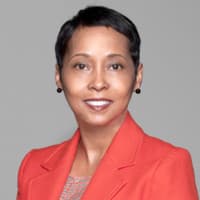
just a little history of myself. More white Triangle. I am currently vice president for scientific and regulatory affairs at the Coca Cola Company. I am Kenyan. I am born and raised in Kenya. Fact, I'm doing this call from Nairobi, Kenya, and I did Ah ah, my primary and high school education here in Kenya. And, uh, I did most of my, um, university education in the U. S. I have an undergraduate, a master's degree in a PhD in food science from the University of Missouri in the US And after completing my studies, I did start my career working for a couple companies in the US But then I returned here to Kenya and secured employment with a global company with the Coca Cola Company here in Kenya 20 years ago. It's now 20 years, 20 years in April, and, uh, again, ah, middle management position. I was a marketing manager Ah, based October night, Ruby. And over the last 20 years, I have managed to progress Ah, in the company to the position that I am to do it. Ah, what I What I can say are some of the key incidents and experiences that have shaped my career path. Ah, several of them. The 1st 1 was when I went to undergraduates at ah Mahn Press State College. I was actually a math major. My father wanted me to study math, and I was a quantitative methods major. But when I was registering for class ah, those days you registered for class in Lyon, not online, and I while I was standing in the math line in the next line was, ah, an empty. There was nobody in the line and there was a sign written food science, and I was very curious. And so I walked over. I got off my line with a long line. So it was a long time before I got to read the registration desk and I went to ask the professor about science. And I can say the rest is history because he already was very interesting. And I had always been a foodie and I love food. And so I thought I could combine my love of food and science and actually make a career out of it. And so that was one of my first experience is being curious, Um, and looking for a career that was something that I loved and would be, you know, could keep me occupied and engaged for many years. The second experience I can say that really shaped my career is when I was going to graduate school. I was looking for graduate school. Ah, I had good grades in my undergraduate, but I couldn't afford to go to graduate school until my exit second experience or advice I give people is ask, Ask for help. And so I had applied to several university news. I had been accepted, but I didn't have a scholarship. And I was really looking for support with funding to pay for the PhD. And I visited the University of Missouri in Columbia one day, and I visited with a head of department. I had an opportunity to meet with him, and I asked him. I said, Look out, Love to study food, science or love to study in the department, but I need help paying for it. And he was very kind and accepted and, um, to pay for it. And ah, look, I had asked many people to help, and most of them had said they didn't have the money. But you should never stop asking for help. Uh, and, uh and so I was very privileged for that. And then the third thing I would say is I've been open to experiences. I actually joined the Coca Cola Company in marketing. Although I had no experience in marketing, they offered me a job. I thought it would be a good opportunity to learn to join a great company. Ah, and I thought I would give it a chance because I had always wanted to work for the Coca Cola Company and they didn't have a job in the area in my field of study. But they had this marketing opportunity and I thought, Ah, what a great way to start So sometimes also understanding. But a career sometimes is a meandering road. It's not a straight path. And so I started in marketing, and I've worked in a few other areas of also worked in several countries, which has given me a broad experience, and I think I wouldn't have gotten this rule that I currently have if I didn't have one, the education background, but also the fact that I've worked in marketing and strategy and planning. I've worked here in Africa in Kenya, in Nigeria, in Egypt, in South Africa. I also spent a couple of years working out off the UK and so I had that global experience, which helped me to get this room. So a little bit of my career journey and some of the experiences.
Uh, well, that's a great question. In terms of what are the responsibilities and decisions one handles in a job like mine. Um, I lead a team ah, global team of about 140 people. Eso most of my responsibilities. I in terms of leading the team, helping them determine what our strategy is, helping them in terms off and enabling them in terms of water, the creek key priorities that we should be working on not just in the short term, but also in the long term, um, ensuring that the team has the right capability, that we have the right capacity, that they have the tools, systems and processes to be able to do their job well to keep the team on the community connected because, again, 140 people in over 45 locations, it's very important that we're keeping connected there. Some teams who work in Asia that we don't really have the same working hours. So how do you make sure that when we're able to do it, either virtually or physically, but also that where ah lot of communication is or materials are self help, since we don't have the same working hours. Um And then, of course, making sure that you have the right hierarchy of meetings. What are the leadership team routines and leadership team meetings? Sub teams? We have many sub teams. What are their routines and what are their meetings? And then from time to time, of course, having all hands meeting meetings and then from time to time, also doing skip meetings, making sure that from time to time you're also able to touch everybody in the organization. Of course, it doesn't happen us frequently, but I think it's important to also ensure that the total you're touching as a leader that you're touching the entire community. Um, so you know, Web travel again? I have people in 45 locations. So a little bit of what travel. Now we get to do that virtually versus physically in this new world. Ah, we do allow the Coca Cola Company. We do allow some flexible working hours. Everybody in the team gets a chance to work from home from time to time. And of course, now we're all working virtually so I think everybody is beginning to learn that actually, we can do a lot more things virtually. Ah, so I think in the future will see more work from whom more virtual, perhaps left in person, less travel, which, of course, is also good for health and wellness. Yeah, so that the new normal is more virtual more work from home unless time spent on travel and less time spent in physical meetings.
Well, I guess the biggest challenge, of course we're facing to do it is how can we continue to do business efficiently and effectively during this pandemic? Which means, for example Ah, you know, more online, um, business. Ah, in terms off how we sell our products of how we get our products to consumers. Specifically working with my team, how can we ensure that we continue to be efficient and effective working virtually. But we also keep connected. Keep you know, those things that we were able to do in the office. He's stopped by somebody's death to say hello. You have a casual coffee, etcetera. How can we continue to do those things? Virtually So we're making sure we have more connection points. Um, we're making sure that we have some social hours, not always just connecting for work. How can we also do social hours virtually so that we can continue to work as ah ah, high performing team? Um, in terms of all what? My work, Um, specifically, you know, I'm were responsible for scientific and regulatory affairs. So most of the challenges we face are sometimes regulatory changes, uh, sometimes and again It's about making sure that the team has the right tools has the right systems and processes to be able to, uh, hopefully proactively identify any potential regulatory changes. The best way to be prepared is to anticipate some of the changes, but also for those that we don't anticipate to be efficient and effective even when you're being reactive. How can you ensure that you also efficient and effective being reactive? But again, it's always better it was able to anticipate and plan in advance, um, for those regulatory changes.
