
This is software (AWS) generated transcription and it is not perfect.
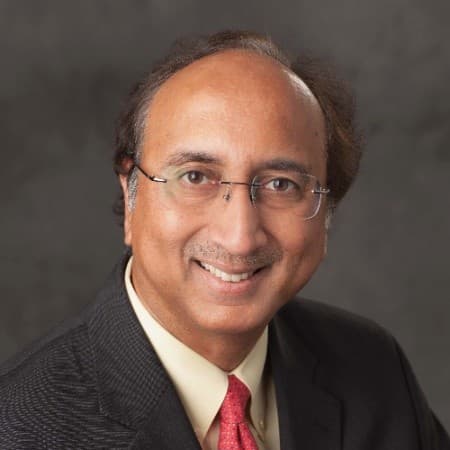
Thank you very much for this opportunity to share my experiences. I am originally from India, but with the number of years that I’ve lived in the US, I don’t know if I can call myself that anymore. I came to the US in 1985. With a background in Mechanical Engineering and an MBA in Marketing, Information Systems was a strange discipline for me. But I felt that the way technology would go, it would be a dramatic transformational force. My interests were in strategy, marketing and business and I wanted to be at the interface of technology meets business. Over these 25+ years, that’s what I’ve enjoyed, being at the interface of strategy, and all the disciplines in technology. I’ve also lived in Tallahassee, I’ve lived in Maryland, and for the past 16 years we’ve been in Michigan State in Lansing. When I’m not working, I like to play tennis, though you can’t tell that I’ve been playing for 16 years from how badly I play. I also enjoy music, movies, cinefil, I’ve been known to drop in a lot of cinefil references in my classroom. It’s been an enjoyable ride to far and I’m happy to share my experiences.
Just like any ranked and reputed business school, in our undergraduate program, students learn a variety of functional skills that prepare them for jobs and readiness to work in the current economy. We are very reputed for our strength in Supply Chain, so a majority of our students major in Supply Chain. We also have other disciplines such as Marketing, Finance, Hospitality and Business, Management, and of course we have a large major in Accounting. Our strengths in the undergraduate program are in Accounting, Supply Chain and Finance. We also have a variety of graduate programs, including the full-time MBA, the executive MBA, and I teach in both of those programs. I was involved in the launch of our Masters program in Business Analytics, and now it’s in the top 10, so it’s been a fun experience. We have other masters programs such as the Masters program in Accounting, where we have nearly 180 students on a global basis and we place them mostly in the public accounting firms. Then we have Masters in Supply Chain, Masters in Finance. More recently, we have begun to focus on online masters programs. We launched a Masters program in Management Leadership, and we’re about to launch a Masters program in Healthcare Management. We expect to grow the online presence through new masters programs.
One of the things that we’re trying to do is becoming more proactive in recruiting students. In our undergraduate program, we admit about 1200 students to the business school at the end of the freshman year, so the first step is to apply to the university. We are a very well known school, there’s a lot of brand loyalty, a lot of good colleges send their students to our programs. We don’t necessarily see any misconceptions that discourage students from applying to our programs, other than the fact that Lansing is small place. In a global market, sometimes people are not familiar with what Lansing is and what it has to offer. It’s actually a wonderful college town, it has the four seasons, the tailgates of the football game, a strong basketball program, great academics, and the most important thing that I’ve found is faculty who really care. People who are here have been here for life, and they truly care about students. In our masters programs, like most other peer business schools, we are facing challenges in growing our full time MBA, and that’s one place we have worked hard in clearing misconceptions of us being a Supply Chain school. While we are that, we have added a variety of other programs and specialities, so that we can now nurture people who have an interest in a consulting career, an interest in e-commerce, or in digital companies. We are, of course, honest in admitting that we are not an Investment Banking school, because we don’t have that. We focus on Corporate Treasury. Overall, our brand is good, and we attract students, and we don’t suffer from any major misconceptions that inhibit students from applying to us.