
This is software (AWS) generated transcription and it is not perfect.
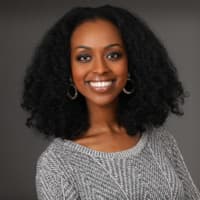
or this question and thank you for inviting me here today. Um, so my story, um it's a long and complicated one, but I'll give you the highlights. I was born in Germany to Ethiopian parents, and I think you Minnesota, the United States when I was one year old, um, and I grew up in a very ripped, beautiful communal vibrance, uh, give immigrant community in the Twin Cities. And, uh, I've shared with many folks, but what was the most impactful part of my house? That was that it was all about community and all about family. And in the early days were not many of our biological relatives were in this. It's we created family with also were there, right. So we have newcomers from giving, who lived with us for months, for years that it's hot became family. Um, some of my closest cousins. People like calling as a fraction related at all. And that was just, uh, my early experience and my early reminds her that community is so important, right? And that you're never alone. And, uh, in addition to never being a bold and never having Teoh, you know, feel that isolation. Um I think it also taught me that I have a responsibility and a duty and a service community as well. And that was both from my you know, community in the States. Added to my you have a huge extended family as well. So so many of my rather since already both of the cities at the rural areas and, uh, very young I had a passion and a fire because instilled in me that, you know, I have a hole in my family. I have a role in my community. I have a role in my home country here in the States. And that's really what led me. I realize now into public help. Uh, where I be of service. I could get part of contribute Teoh a transformation at community level, right and right. See healing and justice in action in really, really different settings.
So I currently work as is your director of population health at Pillsbury. United Communities were a local nonprofit in based in Minneapolis, Minnesota in the United States, and we're about 140 years old. And the responsibilities and decisions that I giggle on a day to day basis, um are in large part around kind of the administrative functions of organizations our size. So the fine and hands the human resource is supports Weren t, um you know, Branson ship and fundraising through all of our various funding streets across government write it and public sources on then also around strategy. Right. So developing programs, designing programs, creating and thinking up new approaches. Teoh undressing physically healthy equities. And so, uh, in addition to administrative and strategic, a lot of my bullets Also coaching, developing other folks with anarchy, right in a leadership position it has a model. How toe handle top model house. Deliver address, accessible context. I have a model. How Teoh you supported teammate, right? That's what I do burn TV about 20 folks both directly and indirectly as yes, So I work from home quite a bit, of course, in the cove in 19 moment. Almost all my time is working from home. But work open 19 because a lot of the work I d. Was community based. I would spend, you know, several days a week at least, TV Jake with my teams on site was unity centers six models. So I had some opportunities Gates T's on site, but even purport focus two or three days that were also
so challenges in the job like my definitely are everything, mainly around the pressures of funding systems. So in a lot of work, right, how you finance force and sustained work supersede for us. We operate primarily a government funding private. It's a lot of art strengths, whether it's having the right number of people to get us a job done or whether it's delivering over for certain, uh, ran track. I'm not having enough time to do that. All those straits, really from how it worked. Three sorts. And that's a really big Trudy thorny, complex problem that requires a city systems change work. But in the data day, it's some approaches that are effective in dealing with those challenges are really in a team based culture, right? So I can. It's not me against my teammate this really hard deadline. It's my teammate against this really hard at eso, recognizing the team and recognizing that there are always other folks that all on, and it's really, really important to learn how to verbalize vocalize when you need right. I was coming up on several several different deadlines and they all happen to be the savings Act, and I was like myself. Like the universe fired against. Right? Uh, but when I stepped back, and I actually assess what I had on my plate and you could do that in different ways, right? Make lists. Well, that's digital order at writing things out. Processing with journal exercise. Get depressed sometimes a little. Bob. What helps? Sometimes. But once I was able to see what was on my plate, I could I gamble. I okay. This is where I can pass experts for help. This is lacking us. Why this? This is like that person. That's why I developed my teeth. He's another really important approaches. Prioritizing, so realize everything doesn't need to be done. Yes, right. So are not as urgent as people like that. So, really, being able to stop that recognizing your human capacity by recognizing that you're doing amazing work prioritizing what's the most important thing that I need to do right now, right? And being able one. So have a habit, because everything is it happening, right?