
This is software (AWS) generated transcription and it is not perfect.
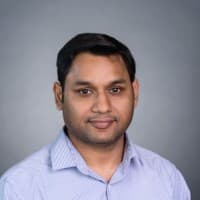
I studied, all right. Started in India, I went toe originally 1,000,000 college, the most London regionally in college in Jalalabad, which is a one off premier engineering colleges in India on, um, I passed out our I've graduated in 22 2002 personally, all right. And if you remember, 2001 is when 9 11 happened. And then there are the down thrown. So no, we get early in India there cos some to the campers and they will have, like, the campus listens in terms of getting a job and all of that. So we what happened with me was I had a job offer in hand before 9 11 even happened on the 9 11 happened on the year passed by on, um, the job offer didn't really materialize in the sense that the company this very I didn't want us to join at that point of Simon's initially delayed it. And thereafter, the busily there was a very ambiguous big situation happening at the time. So this first 6 to 8 months Waas Ah, very big and ambiguous for me in terms of figuring out what I want to go. How do you go about even finding a job, especially in that market, are in that uncertain times where there was already a downtown. So they're a bunch of things that I learned during that time and also like a lot of resiliency within me on court built a bring that time where bacilli it's you face a lot off, huh? Not exactly rejects ALS, but kind off a situation which is not under your control but which affects your life directly. So that kind of built out resiliency in me. And then I went about trying to find a job on my own. I ended up like visiting multiple cities within India, which are far from each other. So traveling on my own and bring all of that Andi. Eventually I landed our job in a start up on part of the experience also helped in terms off joining a startup where you one of the critical aspects off working in a startup, is you have to take up a lot of responsibilities on your own and do things on your own on that also waas kind of record, because I had already gone through a lot off uncertainty before that. So the opportunity when it came, it really helped me, like jump into it and also had built out back. And to see Adam and me myself will really prove good that I can do the job and build up along those lines. So that's always started my career on. Then I spend a couple of years in that company, and then I joined an R and D company in Bangla or after that on. Then, after around five around five years off working in Bangor, India, I came to us to do my Masters. I went to Columbia University who do my Masters after my Masters. Then I basically moved to the Bay Area in California and the doctor I've been working here in the Bay Area and even in the Bay Area move. I worked in a very small start up for like around 65 years, where I joined Well, that's probably the first engineer on the team, us up and there are a bunch off learnings along the part, so I think the most critical learning is I learned a lot things about myself, which I felt like give me a lot of confidence in terms of knowing that there are things that I didn't know before that I could do on being put in a situation where you really don't have an option off not doing it. Because a lot of the product that we wanted to build on the company kind off rest on your soldier by itself makes you both achieved that. And in that process, you learned that, Yes, hope I possibly didn't know that I could do so many things. But now, since once you do it, you get to understand a lot about yourself as well. It's so that's kind off. My journey had bean. Right now I work in a a company called Crunchy Roll, which is a part of Wonder Media, which is part off TNT. I am the senior engineering manager in the company. We basically do and video streaming are particularly like like an Netflix like product. You can go to crunchy granola bar home. We basically primarily focus on animal videos and an immediate resource, or anybody who is an enemy found probably nor French roll on. What I do there is I am the manager off the we do infrastructure team, so all of your steaming aspects is kind off response. Forgive me and my teens. So that's, you know, I'm praying to summarize a lot of those in a like summaries, or but that's what my journey had been so far.
weekly work hours are difficultly. I mean, this right now there is the whole work from home or the remote work situation do took over it. That has basically come upon all of us. So I'm basically working from home since beginning on march. Um, we still don't know when you're going back to work, but in general, typical work hours is like 40 hours a week. Gently. Uh, however, I mean, General General industry standards in and in the software industry is that you need to basically deliver on the product that you're working on on. You need to do what needs to be done. So that doesn't necessarily mean that you work on the weekends and outside work hours. But it means that you invest your time wisely in terms of getting your work done on time. And then so to give you the example at times, I may be working a little more on certain days, and on certain days I may actually be working a little less. So that's er time management that you, every single person kind of managers, are. He's on our own more flee in terms of decision making and responsibilities. One of the prime responsibilities since the video infrastructure team is family responsible, the entire video streaming infrastructure off French it'll one of the prime responsibilities is that video streaming experiences seen this and the platform is not down. It's not like somebody launching, and you can't pay the video. That's just cannot happen. So we also have legs to persons in which me and my team members are on. We have a software. Large suites basically get regard. If something is breaking on, then basically we need to log in and fix it either quickly or find out solutions so that can happen. Even outside of work hours, for example. That can happen even in the middle of the night, so we generally have locations across the team. One week I'll be on probation. Another week. Someone else will be and so forth. So we try to manage that that way. Uh, while that is there, it is not very often that we do need to with up in the middle of the night. I having said that it's not that you never get to wake up in the middle of the night. You possibly will be waking up in the middle of the night, say once in six months are twice a year or something like that in terms of decision making.
right with services are back and Web services. That is what my team primarily focuses very heavily on we have. For those, most of those with services are little and go lang. Today we have some tools which are very video specific video processing tools, which are written in C C plus plus. We have some pulling on top of that in fightin, for example. Oh, algorithm. Something just the typical normal computer science data structures and algorithms is work mostly what we use now day to day work. So I think one of the most often used is probably maps and asked maps and those things. Those are the most often English ones, uh, languages. Why this goal? And I mentioned we have fights on rehab c++. We also have a little bit off elixir and R. Lang in the mixed on. We're on our services, mostly on Amazon aws. So that is the so a lot off the AWS constructs are someone who needs to work in the staff, will need more little bit off our lawn a lot off the AWS, constructs and have less metal rod ease and pools