
This is software (AWS) generated transcription and it is not perfect.
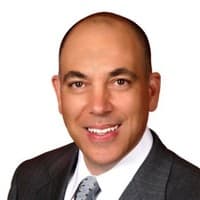
I've got a very blessed history, and it's an interesting story, so let me just go back a little bit. When I was literally a junior in high school, my mom, dad, and I lived in the New York area. My dad was getting transferred to the West Coast and he said to the family that we're all moving to the West Coast. I decided that obviously as a young man that was playing sports I decided I was not going to go and at the time my family said, if you stay behind you are on your own. At the time, it was a very difficult start when you really think about it to be on your own at the age of 16 still junior in high school, but it shaped a lot of my character going forward from a variety of different perspectives. Number one was learning how to survive and I mean literally surviving with having to go in and do 80 hour work week while still going to school while still doing all the other things. Every credit I got both finishing high school as well as I went to from data systems into for vocational studies in computer science for specific operations. Ultimately went for a two-year degree, four-year degree every single credit at night all working full time. So you learn an awful lot about how hard you work to get to just getting into and getting your career started. During that period of time, I was working all different types of jobs, most notably heavy construction, where you work in the winters and it gets pretty darn cold and you learn an awful lot about the appreciation of being inside and working inside an office. So that shapes my career, that starts my career and I think it gives me the foundation of understanding and always being not afraid of regardless of where I start or goes where I am, I can always be better and I can always get to a point of success. So when you literally start from where I started, I graduated from a very difficult neighborhood in Long Island and it wasn't exactly the CEO capital world because you know Jamaican New York is a very tough neighborhood in the New York area. If you graduate, you get out of that high school and get out of that environment, you're not slated to get to the sea level, so somehow I made it here. So that shapes the beginning of my journey to where I am today. But I also had a variety of good mentors, mentors in the sense of both good and bad. You learn very early in your career what you don't like from management styles from people who are in authority and you take that and you say I'm just never going to go do that. As well as you learn from those individuals that are good. Then the other thing I had always done is I had always taken the hardest path to do something. I was never afraid to make a significant shift that makes a significant change and I've always chosen the hardest path for a variety of different reasons, so that's kind of what shaped me to where I am today.
As President and chief operating officer here at Xerox we're in unprecedented times with COVID right now we're in the middle of a global pandemic. We are in 60 plus countries, we have over 30,000 employees that were responsible for around the world. First and foremost it's protecting our families, protecting the communities, protecting our customers, and making sure that we can help in giving back to the communities that we serve today. Xerox has turned some of the manufacturing capabilities into creating ventilators into making hand sanitizers etcetera. So today one of my daily jobs is how do we navigate and deal with the COVID-19 pandemic grow up against the day. If you look at just my broader responsibilities, I essentially have everything in the company, supply chain, service delivery, go to market for my S and B, I have the IT organization. I'm responsible for real estate, I'm responsible for product development and product strategy. So pretty much I have a good portion of the company with the exception probably direct go to markets. We've got sales teams directing the region. I've got an incredible schedule, my daily day starts at 4:30 a.m every day. I've been doing that my whole career. I can limit myself to 4.5 to 5 hours of sleep per night. So we're constantly working on driving the business, driving the performance of the business, making sure that we continue to bring value to our shareholders both our external shareholders as well as our employees as well as our customers or our stakeholders. My day can be from running and looking at the supply chain, running and looking at IT organizations, driving revenues, spending time with customers. Every day is different and every day is dynamic.
Just take COVID, just take where we are today. If you go back in February of this year, Xerox was in the process of making an offer to acquire Hewlett Packard. Our stock price was worth $35 a share. We were in very good shape in our Q1 activities and ability to deliver the quarter and just 3-4 weeks later COVID-19 hits. We've got to pull our the offer of HP. Our stock was down to the mid 17's down to mid-teens and we've to pull guidance going forward. So it's a perfect example of how quickly, good and bad these environments change. It is all about leadership, It's all about how do you lead through the different dynamics, global dynamics and it could be economic dynamics, It could be competitive dynamics, It could be a technology dynamic. Something hit us from a security standpoint or something hit us from a competitive standpoint that we didn't know was coming. So as a leader and a leader to the company. You've got to be prepared for any and all of those things. COVID is a great example of not knowing what you don't know back in January and then being in the middle of it in the middle of March and you rely on your leadership skills. You have 30 plus 1000 employees that are looking for leadership to how do we get to the other side of this safely? How do we get the other side of this where we have a company? How do we get to the other side of this but we still have people employed? How do we make sure we don't Infect any of our employees infect any of our customers so they're looking for a steady hand. One of the things that I learned about leaders is that the bigger the storm, the more calm and more stable and the more steady hand they are. You find out a lot about leadership in the time of crisis. You find out a lot about leadership when things are not going right. Anybody can lead when things were going really well, It is difficult to lead when times are difficult and when there are challenges that you have no answer for, you have challenges that you have never been have a history and a perspective to think about. COVID-19 is one of the greatest challenges that any of us in leadership have seen.