This is software (AWS) generated transcription and it is not perfect.
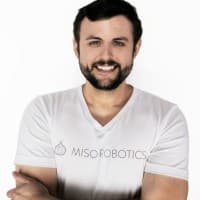
um, you know, I think you know, there have been a lot of different experiences in my past that have, you know, let me to this point. And they're all, you know, unique. Uh, but, you know, I think Steve Jobs once said that you can't really connect the dots looking, uh, forward. You can only connect them looking back. And as I reflect on my experiences at me, So I find that to be ah, really resonate with me. But I will say, you know, to be helpful. Some of the things that I think changed my ah shape my career path and enabled me to get to this point is that early on I started focusing on computers and, you know, wanted to become come to understand that really well, uh, and and then I, ah, kind of, you know, went to college, you know, did what every other student does. Uh, and ultimately, at the end of that decided, I need to enter an emerging market, an emerging technology, which was robotics for me. And so, you know, I entered that field and then, uh, using. But just being in that field brought me to an opportunity which ultimately led me to be so robotics today. So, you know, I prepared myself by getting expert knowledge in an emerging field and by having kind of a network that I built through school. And so those were the two things that I think you have you no control over that you can leverage Teoh to kind of get you into a similar position. Um, but I've always been interested in robotics. So, uh, you know, I I was looking I've studied human like walking and grad school because I thought that would purely the key to bringing in robots into the public eye. But, uh, you know, once I saw this opportunity to bring robots into commercial kitchens, I realized that that's such a big opportunity to the leverage robots outside of the factory. And probably a lot closer than having humanoid robots walking around you and everything
question. Um, you know, when you first start, if you're doing assuming you're doing attack technical startup, you know, your what you What you only will need to do is lay out all the risks, you know, understand how your business is going to make money and then lay out all the risks. You know, they're going to stop you from getting Teoh a building, that business. And so, you know, for us, we wanted to use robotics and commercial kitchens combining computer vision. Ah, and and, you know, other optimization based mathematics. So, you know, there is a lot of potential technology risks. Um, you know, given my background, I had confidence that we could achieve, uh, you know, solve these issues, but, you know, the investors sure did. And so, you know, we would have to, you know, the first thing we wanted to do is we knew we need to show Can we flip a burger and then can we actually get a customer and deployed this right? And so we were lucky enough to have a founding kind of partner as a customer, and so we were actually able to check that box fairly easily. Uh, But initially, you know, you start off, it's just doing engineering. And now we've grown to a company where it's, you know, 25 or so people. And so, you know, if your founding a company, the skills that you use on day one have to your skills have to evolve every day, every week over time. The things that you're doing today will not make you successful tomorrow. Um, and so for me, you know, I started out just coding day and night and do under the robotics theory whatever was necessary to get the product built. Ah, but over time, I've had to evolve to learn how to hire and manage a team building organization. Ah, and and figure out product market fit for the businesses has been, you know, is always part of the challenge. So the key is to is to read from you is to just read a ton. I will read several, you know, 1 to 2 books a week generally, and just kind of learned how people who have had success in the past have done this and start to understand what you should be working on. Really? So you know, I wish someone had shared some of the readings. I'd had it when I started this, but I, you know, ultimately came upon them. So you have reading. I think it has been a key thing to help me out with that.
It's funny because, you know, when you when you first start doing startup, nobody wants toe even hear about your crazy idea. Um, you know, it sounds cool in, like, robots in the kitchen cooking, but like, to actually convince someone to come and work for you, uh, is a big challenge is you know, a lot of people would be interested in the opportunity, but you want the best people. And so you know, the best people get the best opportunities and have the best opportunities available. So how do you, you know, build something from nothing when all these other attractors air out there you're preventing you from, you know, high making your hires and those first tires were really hard. And, um, you know, So initially on the technical team, it was my co founder, Rob Anderson, and I and we were the ones on that part. And so we just built the product. We hired a bunch of interns out of from our Caltech A network, and that was really effective. Interns were very effective early on. Ah, if you get the right ones and ah, but then, you know, we actually like I pretty much just like, blew up every person in the field on lengthen and just message cold called, you know, hundreds of people and eventually found someone that we wanted that wanted to join us. You know, our first full time staff member and he was fresh out of Cornell. So, you know, he actually flew across the country and joined us without even ah without even, um without even visiting. But it was an exciting project to him. It was in line with his interest in his skills were in line with what we needed. So it was just It's just, you know, sheer perseverance. Like I would spend two hours a day I'm or more on Lincoln, just like looking for people on message in them of an over time and especially lately it's been much easier. Everybody wants to join and, you know, it's funny. I mess are you know, I messaged all these people like several years ago, like just a few days ago, we announced that White Castle we were deploying with White Castle, and that was a big announcement for us. And, you know, I actually some of those people were pinging me back years later, so kind of this kind of, you know, full circle. But, you know, once you have traction and once, you know, especially our company, we were just The problem we're working on is just, like, you know, made for TV. And so the press loves it. And so once you start to have that and people see it as a successful company and you start, you build that critical massive of smart people that are gonna, you know, do your core work, then everybody wants to join. So it's, you know, now that we're fundraising, unseating best publicly, and it's a lot easier, I think, to get people interested in the company. Ah, yeah, I mean, it's I mean, we still like, you know, we would call it Like I said, I called hundreds of people to get that first higher. We still interview several, you know, or called several 100 people for position today, but it's just that now I have a team helping me do that process. So you know, it's nice. You still, you know, it's still really important to put proper hiring practices in place even as you grow, especially as you grow, because then you know it's easy to just hire somebody who really wants to join your company. But, you know, you got to make sure that's the right person, so but it feels good. Yeah, I mean, it's great toe, just just to be able to get such access to such amazing people, I really met.