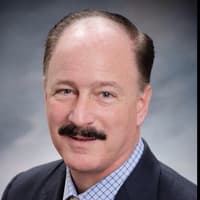
This is software (AWS) generated transcription and it is not perfect.
I think you're you're talking mostly about gig stir. But when you how do you get to where you are today Has to do with it. You know, all your experiences all the way back to college. Um, on. And it would not be right if I didn't mention, you know, one of those. I mean, when I went to college. It's a long time ago, undergraduate. At least I went and had a particular idea of what my major should be and within the first week sat in a math class that basically I felt I'd learned when I was in ninth grade or 10th grade or something very easy. Eso actually asked the math professor who I could talk to about finding a little more advanced class to take because I felt it wasn't worth my time. And she referred me to the head of the department who gave me a test. Of course, everything comes with a test in university on the head of the department who actually still works at that university because I'm on the board of the university now, um, actually said to me, Well, you know, after looking at your test, you're you're a computer science major. So that's how I ended up in computer science when I was younger, which certainly set a path. And this is quite some years ago for me. It, you know, being growing up in the Northeast of the United States. It gave me the opportunity to go work on Wall Street. Gave me the opportunity to be successful, frankly, on Wall Street, with technology innovation being at the core on then, every decision I made since then had more to do with getting involved in an interesting organization that was solving interesting problems to me, that I could make a difference in on where I could make a difference in for me. I ended up being very senior in Wall Street very quickly by the time I was 30 when I was a managing director. So, um, quite young, uh, in senior management and have never looked back. I've always been in senior management since of I and most of the time of, ah, major corporations, some some private organizations or divisions of major corporations, but mostly major corporations. Um, through that experience, it's taken me kind of from financial services to technology industry to health care when I left three insurance industry a few years ago, Um, I was actually not looking for operational roles anymore, So I've been on boards, and still I'm on boards for tech companies. And Dexter happened to be one of those companies where, you know, serendipity kind of intervened in my presenting my being at a meeting that was focused on the future of work and presenting the future of work in my point of view on that topic, where the CEO of Dexter was the first person to meet me coming off stage on, we spoke for hours about the thesis behind Gates there where it was going, what his thought process was and why he wanted me to be an adviser on then a board member. Um, he had a hit personal challenges about six months ago on we, as the board asked, asked him to focus on those, and he agreed and step down. The next question for the Border directors was, Who's going to run the company on? My colleagues asked if I would do it, so I had to arrange my other boards schedule a little bit. But now I'm doing quite a few things. But one of my main focus areas has been gig stir
Well, I think what we do a lot of is right now technology projects for companies and they a lot of people tend to concentrate on. Are you in the Microsoft? Are you focused on Microsoft? You focused and, you know, in areas of AI, where's your focus? And my answer is yes to all those questions, because we actually can deliver capabilities across just about everything and across most industries. Um, gig stir effectively creates, uh, really great outcomes for teams. So I call us a team performance company on as a team. As a company that can deliver high performing teams, we have a network of thousands of gig stirs or freelance workers that we're capable of deploying within a week on any clients problems. As long as the client can describe it that our technology oriented, we do that do it really well. In fact, our data points or for me were unbelievable when I first heard them. Now I understand how effective we are delivering project. So I tell people were also delivering certainty for any business or organization that chooses to use us. Uncertainty as a CEO or CEO is very important and something that you rarely have the opportunity tow obtain. That's one of the characteristics of gigs or as a company in terms of our services sector business. We also have a software platform that we use internally that allows us to deliver as effectively as we dio, which we sell the customers. Onda. We basically sell that as a capability that they can use to manage their teams. Um, close to is effectively as we dio for our teams. Eso we both we sell both software and services. Um, we're a little newer in the in the software business because the software was being developed all these past the past seven years on, it was used mostly in our services capability to prove it out. But it's been well proved out at this point, and customers seem to get value great value from it.
I wasn't here when gig stir started Gigs started seven years ago. I believe the founders had a thesis. They're not with the company any longer. They had a thesis that they could build software that would, you know, both cure curate teams by cure it. I mean skills and, you know, people human characteristics combined to help them form really high performing teams on. It was just a thesis at the time, and they were in the software development business they were building. We're raising money and building software toe. Ultimately, you know, intercede in that particular domain of the I T technology development cycle. Um, in short order. And I have to hypothesize this because when I look back and you look at the results of the company, they realized that they didn't have any way of perfecting their models, both their analytic in their AI models on and do it. And everyone knows that you have to have the data to do it. So they started getting into the services business and growing that business. Now we've done over 5000 projects, and that is a flywheel that's effectively enabling our AI to continue to learn and get more effective and more efficient at giving us insights into the into projects and into teams. Um, so now we have both as a software company. We also have a really big services company. In fact, services makes more today than our software does. Although we don't we don't expect that toe last over time. Over a number of years going forward, we anticipate our software will eclipse our services. Sales on, in fact, have a materially faster growing part of our business be software.