
This is software (AWS) generated transcription and it is not perfect.
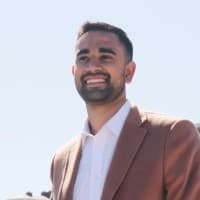
me and I'll give a little context. I want a company called last, so we make sports apparel that helps improve your movements. So for me, you know, my journey has been pretty all over the place. A lot of random turns that I didn't expect. But the one unifying thing is persistence. I have this passion ever since day one that I wanted to build something. I want to make an impact and start a company that you know, not not just something that made money, but something that also made change. And, uh, I believe in creating change through capitalism. And so that was something I was trying to prove out is how much can I improve the world while at the same time creating a profit, making a business incentive, and then how big can I make that thing? And, um, my journey has kind of gone from, you know, when I started on initially left college to create a medical devices making a crutch that doesn't hurt your underarms, and that product, when we put it in the market did well, but not well enough that I wanted to raise a bunch of money and build that kind of business, but rather include me into what was happening in consumer health and showed me an opportunity to build more of a consumer facing sports brand that was in the same way improving physical health for people. So kind of for me, like just to go through all these changes, to go through all the different versions of myself as I was trying to go after this goal of making the impact and in health and and movement, um, staying persistent and just being driven and not really worrying about everything else around me. But just taking a step today, every day toward the goals that I had was all I focused on, and it's all I continue to focus on. And, um, as I look back, I see progress. But when you're in the middle of the day to day, you typically don't feel like you're moving very fast.So, um, I started after I broke my ankle playing basketball and I went through the rehab process, and before that I had not been very athletic, and so I set the goal for myself. The contrary, my rehab. It's something that I do Whenever something goes wrong. I try to overcorrect it in terms of what the right, you know, the positive side of it looks like, so that I could get grow from it. So I decided I want to dunk a basketball and I spent the entire summer of that year like researching, doing a lot of work outs, eating a crazy amount, eating very clean to make sure I was able to put on muscle and added 10 interest. My vertical jump dunk. The basketball and the process learned a ridiculous amount about how my body works. I learned about all the ligaments and tendons fast, but slow twitch, neutral twitch muscle had a build muscle. How to lean up and have a handle body weight. How your core works in your mechanics really all sorts of these pieces of movement, and that is something I've always been bashing about. I've always been obsessed with sports but to be able to do it with my own body showed me the impact that you're, you know, just movement and have on your life. When I was injured, I was so disconnected from my friends because I couldn't do the things everyone was doing. You know, people would go to the water park or go hang out. And I had the way on the couch and just watch TV and wait to get healthy. And so I saw this just massive opportunity to improve physical health and movement in, you know, little ways, but enough to make a significant impact on quality of life. And that means a lot to me, having been through personally and knowing the impact that just getting on your feet like a day or a week sooner can have. That's why
listen to wait for my first spent driver did is more relevant, I think from the student perspective. I was a college student and I needed guidance. So the first thing I did was I sought out looking for mentors, and I was a George attack and I went to a couple of the accelerator programs that were nearby in Atlanta and got basically convinced them to let me sit in and and learn, watch class and watch people pitch. And they let me pitch a couple times and it was scary for sure, because I felt like I was in way over my head. I didn't know what anybody was talking about, but it got me familiar with all the concepts I didn't know. And it gives me an opportunity to just basically have a community around me that would help guide me as I was building my basic skills and getting to a point where I at least had a foundation so that I could start progressing in a direction from a business standpoint. And over the next few months, you know, um, I wouldn't say a lot changed from the standpoint of, um, you know, the desire for mentor ship, the desire for peers who are very good at what they do and could help support me. But really, overall, what I have learned over time is that you're always looking for more help, and you start to begin to discern who's very, very good and who is not so good at what they dio just by the questions that they asking how they look at the world. And so for me, it was a journey to find people that thought similarly and thought big and also pushing myself to think bigger and Maurin innovatively that I was at the time. And I continue to try and push myself and challenge myself to think bigger than I do now. So that journey that happens after is less. It's less about the task, but it's more about trying to improve yourself and be able to give more to the business. You're Billy
with two co, uh, co students. We all had moved together to start the company, and both of those co founders left very early in the business. And so was on my own pretty quickly the way I looked at, you know, Team Dynamics. At first, I think maybe I wasn't as confident myself as I am now where I knew I wanted to get somewhere, but I don't think I necessarily was very good at managing people. It's something that I focused on a lot since then and and being able to really recruit the top talent. Um, over time, you know, as I've gotten better at what I do and I've gotten better at communicating and telling the story of what we dio, it's It's attracted higher quality people to the team and at the same time, um, I was able to get a lot of very passionate people that were young, like me to join the team and start building with me much earlier than I was able to make a convincing case for somebody who was much older to quit their job and come work for me. And so, um, the initial stages, really you find people who believe in you. You find people who are passionate, and you basically just have to find people who will do whatever it takes to make something happen. It's very scrappy and it's very painful, and you just you just kind of have to find people who have fun just doing something with their friends. And it's totally changes from that into more of an intentional structure. More formal roles and that part is, is the evolution we're now where we're recruiting Mawr experienced talent who brings more of, ah sophisticated game plan to the table and more relevant network and expertise in the industry, whereas before it's important that kind of differentiate the two faces goes up front, it has to be all hustle. It has to be people who will try a 1,000,000 different angles and see where your initial things were working where your initial traction is. So it's just important to kind of have that high energy up front and then to slowly bring in higher higher, I guess experience people
