
This is software (AWS) generated transcription and it is not perfect.
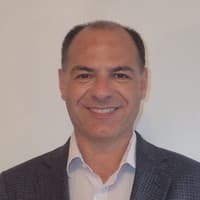
It's a long one. I've been through different positions, different kinds of roles from academia for several years to cloud computing, to twinkl computing and finally machine learning diploma in particular. So let's start from pretty much from the beginning. I'm coming originally from Argentina. So I did my undergrad in Argentina in electrical engineer in particular. And then I did a PhD in the same program between my university in Argentina and France. So I lived there for a year and this is where I got more in touch with artificial intelligence. I was working on an artificial intentions lab in Toulouse. I work on a mental reality. Then I got a scholarship to come to the U. S. to work on a computer vision. So I did a second PhD in the U. S. working on computer vision. I worked on Autonomous Robots. Then I went to work between the street for the first time on I was a heavy user of modeling and simulation seeming like many researchers back in the day on, I decided to work for that company on. After I started, it became one of the numerical specialists for modeling in particular. At the same time, my work because of my numerical background and apply math background, I work on functions for a compiler that we were building. I saw the business grow very rapidly in very few years, So I decided to take a management position. After being the architect, principal, several tangled roles, I became a manager for the simulation for a couple of years. Then I got the offer to start a big data initiative at Akamai. And I spent four years doing that, starting, in particular, the streaming processing until I arrive at two and a half years ago, I started with the most. Most of my tenure was actually was with the computer vision, Lab126. So I was part of cloud cam, security cameras. For Ring cameras, I work on many things there from video streaming, computer vision, face recognition topics like that. In addition, to cloud engineering and large scale systems. Six months ago, more or less, I decided to go back to machine learning on deep learning in particular. I did that back in the day when I was a researcher. I'm leading now frameworks particularly MexNet, compiler technology plus things like the model on several other innovations that we have here at AWS.
I am responsible for presenting the plans for the team, not all the teams but for a big part of the organization. In particular, we're going through this right now. We go around a couple of times a year through that process. I essentially work with product managers or other managers and research what's the state of the art? What is going on in another company? What is going on in research to see what are the biggest needs? Then we usually write some proposals. I come up with some plans for the rest of the year. That's a big part of my work. It's not continuous but when it happens, it's very heavy work because it requires a ton of research. Working with scientists, working with other engineers, other engineering managers, principal engineers, and the whole community, plus the product side. My daily days are more about tracking those projects. Make sure that things move. I have three managers and the fourth one is soon to have under me, so I make sure that the projects are moving. They are going on track. If they find any roadblock or sometimes we have a plan, a given feature or given a toolkit for example, if the team found out that it's more complex or they are using third-party software that now doesn't offer what we expected. Or it's not as stable as we wanted, things like that. When things like this happen, I usually deep dive and work with technical teams, technical people to make some decisions. For example, whether we move forward, we change the tool and then communicate with the rest of the leadership team. The other part that I spend quite some time is working with science, for example, researching new ideas, doing prototypes or working with people doing prototypes both. It's just thinking about what are we doing? Probably one year down the road or six months down the road. The rest of the part is managing people, monetary expectations, making sure that everybody has a career, being successful not only not in a project but in challenges. Also, managing and observing whether someone is not performing as expected to others. Those cases. That's a big part of my day and communicating results, communicate them to my peers, to my management, communicate through my reports to make sure that you know what this happening flows from one side to the other.
Well, depends on what we're doing. For example, for cloud, of course, we'll say AWS. We're part of that so everything is related to AWS. For example to train models, my team and I, we're different little bit because I'm more into experimenting things. So, for example, I'm a heavy user of MXNet because we developed that. I also use PyTorch and TensorFlow very heavily. TensorFlow to work on conferences and PyTorch when whenever I had a chance. I take a look very closely. I look at open source tools that are related to either machine learning and distributed training machine learning in general. But mostly lately has been more about deployment, not much about machine learning, of course. The typical ones, the basic ones like NumPy and all these things which are assumed that we all know. Programming languages, Python is very popular, all across the whole team. And this changes depending on the company, on the position you have in the company. In my particular team, Python is very popular. But the big part of the team also programs in C++ because we're right in optimization. I have one thing that the right code in java so that they will use show API for deployment. This is why I hire people who could show expertise. I mentioned algorithms. Given that we build frameworks, we go from the NLP algorithms, big models, for example, training BERT kind of models. We use distributed training algorithms. We use tools like Horovod distribution or by PiP distribution. We have a huge variety of algorithms. We do many things on computer vision. We work quite a bit in computer vision algorithms.