
This is software (AWS) generated transcription and it is not perfect.
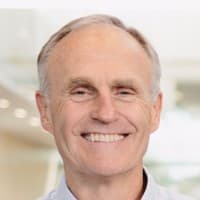
so the way I got here today was by being irritating and obnoxious. So my story is I graduated with a degree in physics from Utah State University than a master's degree in mechanical engineering from M. I. T. Then I started workers and as ah, project engineer, then got in engineering management working for General Electric. While I was there, I got immersed in their lean manufacturing processes and have found out that that was the thing I was best at. I'm really good a process improvement, and so I became sort of a process improvement, lean manufacturing expert. I moved to Utah and ended up through an acquisition working for Franklin Covey at the time, and became their internal supply chain expert, identifying ways they can improve their supply chain manufacturing, reduced cycle times, those types of things. I made a point every day when I was at Franklin to complain about how bad their I t waas and so one day just to get me to stop complaining, the CEO made me the CEO, and so that's how I Dr Weir was. That was about 20 years ago that started my career's a CEO. I tell people the only job I've ever had in I t is either CIA or CTO. I have no experience before that with I t. So everything I've learned, I've learned from the role of CEO and I have made a career out of being a nitrate I t turnaround expert. So I somebody hires me or I consult with somebody on how to fix their bad I t. And once it's running, then I go to my next job and I'm on my sixth. I t turn around for the last 20 years. So the incidents and experience to shape my career are lots of mistakes, lots of terrible, tragic mistakes where I vowed, I will never make that mistake again. So I think I've gotten pretty good. But on Lee, through reverse learning only through making mistakes and saying I'll never do that again
So let me tell you the story of O. C. Tanner. OSI Tire hired me 6.5 years ago because O. C. Tanner's in the Employ recognition business has been in business for 90 plus years. But their employer rock recognition focus, was on manufacturing the awards that people would receive during their employer recognition. Their primary competition changed about started to change about 10 to 12 years ago, so their primary competitors weren't manufacturers but software companies. And so O. C. Tanner realized that in order to be remained relevant going in the into the future, they also had to become a software company. So they hired me 6.5 years ago to become help them become a software technology company. And so at O. C. Tanner, my responsibilities include overhauling all of our internal systems, also developing software products that the market will want that will help us win in the marketplace that will define our future. And then, along with that, all of the other implications of transforming the business model. So getting involved in things like how we gonna price our products, how we gonna support our products, how we're gonna sell our products what acquisitions could we do? Should we do? How do we integrate those acquisitions? So one of the things that I've noticed over my last 20 years of being an I T leadership is that the I T leader role has become much more about turning every business into an I T business. So there is less focus on the specific technologies and more on business transformation or what the buzzword is digital transformation. So that's sort of my role is to reform O. C. Tanner. And I think that's become the role of almost every I T leader and also everyone in I t. We have to help transform the business now my work, weekly work hours. I work a lot, but I work a lot because I love what I do. I enjoy it. I travel a decent amount only cited until covert hit because, um, I've I've along. During the last 20 years of my career, I've written a couple of books, everyone hundreds of articles. I'm considered a thought leader in digital transformation and lean I t and agile. And so I speak in a lot of conferences. I've got teams in India we've got or We got parts of our company that are Australia and the UK, and so I travel at least until Covina decent amount. Um, and I My three sons are three sons are grown and gone, so I work a decent amount from home. However, let me say this. I don't expect that from others. And one of the commitments I made early in my career when I became a busy I t leader is them. No matter what was going on in my life, I would never miss any event in my family's life. So when my son had a soccer game at two in the afternoon, I would leave work and go to my soccer son soccer match. When my other son had a wrestling match, I would leave work and go to wrestling match because I did not want to miss any activities. So I tell people people talk about work. Life balance. Mine has always been blended
I think the biggest challenge in my job is I feel like many of the decisions I make, and much of the work my team does is very high stakes, and we're sort of putting the business at risk with the decisions we make. And those decisions air things about what projects are we going to do, even what technologies we use, what vendors we use our architecture. There's a lot of high stakes decisions in iced tea, and because they're high stakes there also high risk. And so those challenges are. How do we make good decisions that will last? Or how do we prepare ourselves for the great unknown? Because when things were changing rapidly, like they are today driven by technology, it creates a lot of uncertainty about the future. What if I pick a technology that turns out is obsolete in six months? And so how do you move quickly but also not make bad decisions? You don't have time to over analyse things. You have to move quickly, so ah, lot of our focus is on. How do we improve our decision making now what approaches effective handing those one of the lessons I've learned in I t leadership is that I should never be the person that believes I know anything. I've got a team, I develop a team, I hire a team. I've got a great team, rely on the team. And so the best approach I found for dealing with better decision making on all these challenges is to push it out to my team. They're smarter than I am. And so one of the rules I've learned to live by, which was a big change for me. Waas My leadership is a role. It doesn't mean I'm in charge. Everyone else is in charge. My job is to orchestrate rather than did dictate so plenty of examples I could give you about how I rely on my team. When people come and ask me, what should we do? My response is Well, if you were me, what would you do? At least they have to come up with a position doesn't mean we don't make mistakes. We make mistakes, but we also try to recover from them quicklySo I am a big proponent of iterative or agile methods and and Senate. There's there's there. Agile methods, iterative methods. There's always kind of also the lean startup approach to life where you under promise what's gonna be happening the first phases. And so we spend a lot of time not only working with our teams on those two things, but also the rest the organization to explain. We say there because of uncertainty. We cannot make commitments that are more than about three months out. Any time you get beyond three months, you're you've entered an environment of uncertainty, and we can. We will not commit to anything that far out. We can commit to the short term, not the long term. Now that's unsettling for people. But that ties into anything. That's kind of what the philosophy of both, um, agile and lean startup is. We're gonna prioritize the highest value work, identify the highest value working. We're gonna do that first. So the thing that we need the most will be the thing that stunned First, let me give an example. Before I was an O. C. Tanner, I was the turnaround CEO, Western Governors University and one of things we struggled with was student success itself paste. It's competency based. Students worked at their own pace. It was easy to lose track of him. It was easy for students to lose track of themselves, and we wanted to reduce the number of students who have dropped out. And so I knew that there was an opportunity to use Advanced Analytics machine learning artificial intelligence to analyze student data and identify student risk factors and do interventions based on those student rest factors. However, it had never been done before. We didn't know if it would work. We didn't even know we had the right data. So we did a very inexpensive experiment with our admissions model. We did a little bit of work, The data was confined and it turned out that we overhauled very quickly the admissions model that proved to the rest of university that this approach would work. It was a small thing and only took us a couple of months, cost us very little, but generated significant benefits. It was very high value to the organization with very low cost, very low risk, very low time. And then from that we launched into the bigger student success analytics. That sort of fed the What happened to the university after ended up changing the way the university operated. But there's an example where you you identify the thing that would be the simplest to do but also generate a hype, a lot of value. If you can get those two things together, do it and then use that as the proof point for what happens next. Because the other thing I talk about when I talked with my teams is his notion of the long tail. If I measure value versus time of a project, there's a lot of high value activities at first. But then the value decreases over time. Well, in that long tail, sometimes, if you if you commit to everything that people want when you start the project, you're committing to the long tail. The problem with a long tail is now you're spending time on things that generate very little value. And so I say, no, What we're gonna do is we're only going to commit to the stuff that's a high value. We get that early, and at some point we may never, ever get to the things that we've determined are low value, and so those are things we're just gonna do without. But I've delivered so much value at the beginning that you're happy with our projects. And so that's how you balance uncertainty vs commitments we only commit to with hard date commitments. What is in the near term? I'll give an example here. The example I uses. This will be done in the fourth quarter of 2020 Onley when I know more. Can I say this will be done in November of 2020 on Lee when I know more? Can I say this will be done on November 14th 2020? I can't say that nine months or six months in advance, it will be done on November 14th. I don't know enough. The worst time to make a commitment is when I know the least on. I know the least at the beginning, so I never make commitments. I commit to getting something done, but not everything done
