This is software (AWS) generated transcription and it is not perfect.
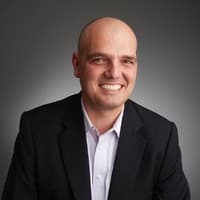
one. My name is Mike Scarpelli, and I am currently the CFO of Ah, private company called Snowflake. Excited to be here today to share some of my background with you. Um, one of the questions is how did they get to where I am today? Well, I didn't start out as a CFO. I really and I never really wanted to be a CFO. It just kind of happened. Um, actually started my career very early on in public accounting. And you may say, Well, why did you go into public accounting? You know, when I was in college, like many of you are right now, one of the things I wanted to do was to see the world. And, um, public accounting firms enabled you to, um, work anywhere around the world in their offices. And I joined Coopers and Lybrand in 1989. When I graduated from college and I was successful in being able to see the world. I worked in Europe. I worked throughout the US I'm originally from Canada, and that really laid the foundation for getting into finance. I stayed with Pete up. You see, for 12 years I was a partner for four years, but I quickly realized early on in my career, um, when I was a partner, that did I want to do this for another 20 years, and it wasn't something that excited me. I'm very glad for the experience that I got from PWC. And without that experience, it wouldn't be where I am today. But I left that in 2000 and two, actually, December 31st 22,001 is when I resigned from the firm and I left to go run corporate development for a company. And unfortunately, when I joined that company, I uncovered a massive fraud within that company, which put me in the seat of being the CFO and actually running the company for quite some time was probably the best experience ever got, because I had to deal with litigation. Litigation is really probably something you probably never want to go through, but I can tell you you learn a lot when you go through litigation, securities litigation, um, and ended up wrapping up all that litigation three years, then ultimately selling the company, Um, and then I joined another company that was going through some financial difficulties and joined that company to clean that company up and then sold that company within a year. That was another public company lecture, media. And then I was at a point in my life where I was being recruited by a number of public companies to kind of come in and help turn them around, clean them up where they had some little bit of financial difficulties. And I just decided I was sick and tired of having to clean up other people's messes. And I want to build and an opportunity presented itself for me to join a start up at the time. And it was very tough decision for me because it was taking when you join a start up, everyone, they think of all the great things that happened in startups the outcomes when you have a successful company. But it takes a lot of work and it takes a big risk because you're generally take a very large pay cut to go to a start up with that dream and hope that the equity will pay off. And I was fortunate. Back in 2006 they joined the company called Data Domain, that I was able to take public in June of 2000 and seven. Um, ultimately that company was bottle if I e. M c for around 2.5 1,000,000,000 in 2000 and nine, I stuck around with GMC for two years running finance on the West Coast for them. And then the former CEO of ah, Data Domain, who I worked with, approach me to join another company service. Now, um, and I joined that company back in 2011 took it public in 2012 and then, once again that CEO Frank's movement, who had retired from service now two years before, approached me to come work with him again at Snowflake, where I am today and why I think that's important to tell you is, I never left Data Domain to go to a better company. I never left service now to go to a better company for me, and this is the biggest thing. It's all about the people you work with, and it's that team and trust and I really had that. And I still have that and frank a number of the other executives who have followed him along the way. And that's where I am today with Snowflake, with the goal of taking this company public one time soon as well
and a job as a CFO. It changes company, the company in the case for me, I've always had the general counsel and all the lawyers reported to me an enterprise software company is a lot of lawyers because you're running through a lot of contracting. And I would say my expo early experiences in dealing with litigation For a number of years, I have always been used to working lawyers. So I have a very big legal team that reports into me. I also have, um I t reporting into me. Um, I have it. So the c I o reports into Mia's well, too, and I am actively involved in sales, operations and sales finance as well. I get involved in many of the deals that we the both existing customers and prospects because of the enterprise, nature and a lot of the buyers of our product. The CFO gets involved, so I get pulled into a lot of deals, and I would say that's a very, very enjoyable part of my job. But on top of that, you have the traditional accounting finance tax F d n. A internal audit that I run in terms of hours in the job. I will say very early on in my career, I worked a lot in my twenties and thirties. Quite frankly, I was working 60 to 80 hours a week. I'm not exaggerating. I got married later in life, but as you get kind of older and your career, I don't work nearly that many hours of physically being involved in the office. But I would say with this type of job, the job is always on your mind and your on 24 by seven You literally are always thinking about things, and that's important thing that you need to understand when you're gonna have a lot of responsibility. With that responsibility, Um, you are always have to always be available for dealing with things in terms of travel, you know, especially now. What's going on with Cove in 19 travel. We live in a virtual world. People are working remotely, as you can see in my background, I'm working from home on have been, quite frankly, since the early part of March, and I don't think that's gonna change. So that's been enjoyable. They don't waste a couple hours a day commuting anymore, so actually feel I'm more productive. But I'm I'm I'm not working as hard because I'm not getting drained by that physical commuting, traveling, So I'm very pleased with the way the whole virtual world has changed, and I think that's gonna be with us for quite some time.
eso probably one of the biggest challenges and job like mine is just dealing with all the different personalities of people and pulling people together. I would say the most important thing in a job like this is building a team of people who are effective communicators together. I find that one of the most challenging thing for young people today especially, is communication skills because people think sending a slack message or an instant message or an email is an effective form of communication. The only effective form of communication is actually physically speaking with people, and I can't stress that enough. You know, in my career, I have seen people where they sit in offices next to one another, but they don't actually get out of their office and walk into the other person's room. They will actually send in email, and that is not effective communications. So as a leader, you really need to foster an Oprah open environment, one of trust, and it's super important to that. You whole regular staff meetings and pull people together, and probably the most challenging thing at the beginning is when you have new team members to get them to feel comfortable to share with others where they're struggling with. Because for my my role is not to tell people what a great job they're doing. Yeah, I'll spend two minutes telling people that those are all the great things you've done. But I'm gonna spend hours telling you, these are all the things you're not doing right or working with you to Saul. Help solve your problems because that's how it's going to make you a better person.