
This is software (AWS) generated transcription and it is not perfect.
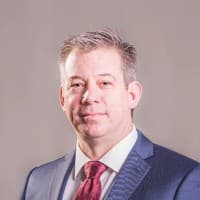
that's Ah, that's a tough question for me cause I've taken quite a jagged trajectory, Teoh, as I'm assuming most people have, um but, uh, I guess it starts with my college experience. I studied nuclear engineering at Rensselaer Polytechnic Institute, and I thought I would be a nuclear engineer. Um, but, um, as I studied, I realized that I wasn't sure that I wanted to be a nuclear engineer. Um, on. I think that's because, you know, I didn't really know exactly what engineers did, and I wasn't getting a clear vision of what that was like in college. I didn't have access to programs like this one Tiu really practicing engineers, and I made it kind of an abrupt decision. Teoh earn a commission in the United States Navy. Um, and I served on nuclear submarines and ended up doing that for 20 years, and I retired from the U. S. Navy in 2012 and, um, I spent some time in the entrepreneurial endeavors, launched my own mergers and acquisitions company, Um, and I entrepreneurial endeavors air challenging, uh, and it and I found that that wasn't for me. And I did that for about two years. Uh, and I went back to my engineering roots in electric power production, where the general manager of a power plant out in the Midwest in Kansas City And I did that for a couple of years, really enjoyed it, uh, was promoted to a regional position, which moved me to Chicago. But then the company that I worked with sold off most of their assets. Um, and that kind of led me toe have to rethink what I wanted to do with my career, and I I chose to go into manufacturing, which is what I'm doing now. So I made a friend abrupt change from the Navy to electric power production to manufacturing where I'm now the planned general manager, International paper here in Chicago.
tackle the working hours. First, The plan that I oversee is a 24 7 operation. It does not mean that I work 24 7 but it doesn't mean that there are times where I'm here at three o'clock in the morning. Um, it's pretty rare, but it happened in general. I work a pretty standard day from about seven. In the morning till about five at night. Um, I do very little traveling. Um, I'm responsible for the financial and operational performance of this plant. One of things I like about it. My previous assignments had me traveling quite a bit. Um, and, uh, and I like being able to go home every day. So, uh, this job really travel much, But in terms of responsibilities and decisions, do I make you know, I think first and foremost, I'm responsible for the people that work here. Everyone is doing their job and doing it well on most days, I'm not making many decisions because those decisions are being made by individuals. So, for example, production We have a manufacturing manager who handles production. We have ah, controller handles finance. We have customer service handles customer service. We have HR handle HR, but we don't live in a perfect world. So when things are a little bit, you know when when a particular item it is a little bit dicey year a little bit different or the person needs a little bit of guidance. You know that. That's when I get involved. Um, so I look at my responsibility in my decisions to make sure that everyone is performing to their maximum capabilities. Um, in the large sense, that kind of makes me a coach, uh, coaching to make sure that everyone has the support they need to do their job.
so, I mean, the challenges that manufacturing is that each day is presenting new set of challenges. Um, you know, we have 13. What we do here at this international paper facility is we horror gate and print boxes, which is pretty simple, but it's not. It's not simple. We have 13 different machines in, ah, 300,000 square foot facility. We make, uh, close to a 1,000,000,000 square feet of boxes a year, and the our customers rely on our products. So folks like Tyson Foods and Amazon and Wal Mart um, their product doesn't ship. It must be provide them boxes. So when a machine goes down, you know that could potentially impact. Um uh, absolutely. Um, so you, you know, dealing with. So, for example, customer says, hey, I'm gonna have I'm gonna have to shut my production line down on this Unify. Don't get these boxes. Um, And yet, you know, we have a material deficiency in the plant where were struggling to fix it in time. No, that's ah, that's a real challenge. More than a more nuanced challenge is that machine require preventive maintenance? Um, and that you know, there are times where you have to bring the machine down to do. Maybe even though there's nothing wrong with it, just like your car. You bring in the shop for an oil change, even though there's nothing wrong. We have to do the same thing the plant will. Sometimes we have scheduled maintenance, but yet there's production pressure to forgo that mean it's and you played your car. If you make the decision to forego maintenance too often, eventually you're gonna have bigger problems with your car. Um, so I think production, customer service, you know, just being able to communicate to our customers the expectations of what we can do. We can't do um and folk and ensuring that, you know, if we can do it, we will do it. Um, you know, establishing trust with customers so that they know Hey, if we say we can't do something, it means we can't do it And that's and that's not always easy. But it's ah, it's a necessary part of manufacturing and customer service