This is software (AWS) generated transcription and it is not perfect.
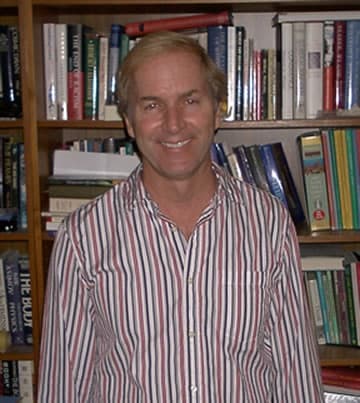
Originally, I'm from California. I was born and raised in Newport Beach, so I got to grow up around the beach which was a lot of fun. I moved away from that area for my first job as a professor, that was at the University of Nebraska-Lincoln. I came here in 2000. I've lived in Salt Lake City ever since. In terms of activities I enjoy, my wife and I are very into outdoor fitness activities. I'd say she is more systematic about it than I am, but I try to keep up with her. We enjoy travel. I like to cook, I actually worked in a restaurant as a cook and I find that very fun. I like music. In fact, some of my colleagues and I have a department band. We get together and play every now and then. I fancy myself as a Do it Yourself for home projects, so those things keep me pretty busy.
For under-graduate and graduate programs, the course work centers around what we in our department have divided up into four main areas of study. Those are Ethics and Value Theory, Metaphysics and Epistemology, History of Philosophy, and last one is Logic. Contentwise, these courses encompass a very broad range of issues. Historically, all academic principles grow out of philosophy. In the Middle Ages, when the modern university system was being formed, there was really just two fields of study - Theology and Philosophy. Basically, Philosophy was everything else. Physics, Psychology, Biology, and so forth - all these subjects grew out of philosophy. So philosophers still try to do a little bit of everything, and then there are some subjects that have come to be uniquely associated with Philosophy. If you even just look at some of the course titles that we offer, it'd give you a sense of just how broad this is. In that first area of Ethics and Value theory, we have courses titled Moral Philosophy, Political Philosophy, Bioethics, Environmental Ethics, Justice and International Affairs, Philosophy of Law. In the second category of Metaphysics & Epistemology, we have courses titled Science & Society, Philosophy of Mind, Cognitive Science, Philosophy of Biology, Philosophy of Physics, Philosophy of Social Science. For the History of Philosophy area, we have courses in Existentialism, Ancient Greek Philosophy, Classical Chinese Philosophy, Early Modern Philosophy, that is an area I have special expertise in, the history of Science. And in our fourth area, Logic, we have Deductive Logic, Inductive Logic, Rational Course Theory. These are just a few examples of how broad a course of study you will get in either the under-graduate or graduate programs. For our graduate students, typically they would do two years of advanced coursework in those kinds of areas and then they would start focusing on research and the research program would culminate in the writing of a dissertation. Jobs wise, our grad students, typically, have in mind a career like mine. They want to be a Philosophy professor. Under-grads is a much more of a mixed bag. A typical Philosophy major is likely to view their studies as part of some broader plan. For example, a student might be a double major, or might be minoring in another field. Or they might be planning a career in Law. Pre-Law is very big for Philosophy majors. But because of Philosophy's foundational role in every other academic field, it combines really well with any other field as a double major.
There is no single profile, I think that can be said of any field. But you could probably break it up into two major groups. Those of students who are just taking up Philosophy because they have an intrinsic interest in the field. They find it very gratifying. These will typically be students who ask the 'why' questions. They want to understand how things go and think it through for themselves. They appreciate big ideas, influential thinkers, and so forth.The other case is, students who come to Philosophy strictly on instrumental grounds. By that I mean, they aren't thinking of the study of Philosophy as valuable for it's own sake. They've heard, rightly so, that students of Philosophy do really well in exams like GRE, LSAT, GMAT, MCAT and so on, and they do well in these exams because they all emphasize on logical reasoning. And philosophy courses emphasize logical reasoning. So many students pick up a philosophy minor or even a second major in philosophy because they want to do better in those exams and get on a better grad program. I believe most of them come for a deeper appreciation of Philosophy for its own sake but it still might be secondary in their thinking.