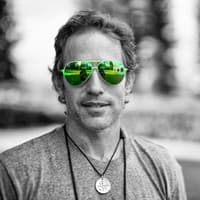

This is software (AWS) generated transcription and it is not perfect.
My story is maybe different than many entrepreneurs today, that I did start out, working for a series of big companies. I was a currency trader for a Japanese bank out of college, and I went back to business school, and then I went to work in Hollywood, I worked for 20th Century Fox which at the time was doing really good work, and then I started to get more of a technology bug, so I actually transferred to London, where I work first for Sky Television, also owned by News Corp, and while I was there I started to work on interactive television, which at the time was using Teletext in the UK, which is a way for owners of programming to deliver messages in the TV stream and you could actually respond to them. So I decided I needed to devote more of my energy to understanding this new thing that was the internet, and at the time, no one really knew a lot about it, and so I moved out to Boulder for a couple of years, but I continued to build interest and I moved out to San Francisco, and in 96 I fully jumped into a very primitive experience, in fact, the company I started was the first company to allow you to listen to music that we were creating for people online. It was called Spinner, so I started that with Dave Samuel, we co-founded it together, and we built it up into the biggest internet music company over a few years, and then we sold it to America Online, probably most of your students will not know what that is because AOL is something that only you and I will know about, but most students will not know it, and I ran the music for AOL at the time and then I left and started another company and that was initially a way for poor people to share their personal media like videos and photos with their friends and family, and again now that's simple but back then there was no way to share large files like that, and so we created a company to make that happen, and so the company was called Grouper, it eventually morphed into Crackle, at the time we were building crackle, YouTube launched and I remember, seeing that YouTube launched what we were about to launch, and they were just first, so I reached out to the founders of YouTube and I said, Hey, why don't we merge and we had this great conversation about merging our two companies but merging two start ups is a very unusual thing, so it did not happen and they became the multibillion dollar company, and we were kind of always in their shadow, and eventually we decide to sell Crackle to SONY, and I worked there for another couple of years, and then I left, and I decided that I wanted to be an investor. After all the stress and challenges of being a founder, even though my companies had good exits, and I decided to come at BC, and so 10 years ago, I started freestyle capital with the same guy that started both companies, and we invest in early-stage startups of all kinds, and then, last month, I decided to leave freestyle and embark in a new direction which is, funding companies that are focused on making the earth more resilient, and that's what I'm doing now as an angel, while I figure out what that means, and what kinds of companies make sense, and what structure makes sense, and it's a reinvention for me, so that's what I'm doing now. In the middle of it, when the COVID crisis struck, I started a task force for the state of California that is sourcing private companies to many of the solutions, that have come from a crisis, and that's been a fascinating journey for me. We've had some really positive impacts on the state, one of the first things we did was deliver the state, there's a lot of food insecurity with food banks and food pantries and even schools. Being concerned that they won't be able to fulfill the needs of all their other constituents, so we went to the private world and we found this amazing company called Silo, and now Silo has created a marketplace between farmers and ranchers directly to food banks, food pantries in schools, so we'll do more of that, I'm still working for the state right now, but it was an eye-opening experience for me, So all those things led me to where I am today.
So in freestyle, we are generalists and we almost do three-quarters of a seed round, and then about a quarter of Series A round, and because we're generalists, we really invest in everything, so in a way that we could invest in great opportunities and great founders. But it does make it harder to specialize in anything, and so every time we look at a company, but most times we have to learn a totally new industry and that's exciting, but it also is more time-consuming. So I would say some of our philosophy really starts with the quality of the CEO, not just the founding, the founding team is important, but really, it's the CEO that we spend the most time with because that's the person leading the company, it's the person with whom we have the greatest contact and, as we are finding with our country, the person sitting at the top is going to drive what the rest of us experience in the country, in this case, it's the company, so we do spend most of our time getting to know the CEO and I get asked this question a lot if I had to pick, most of the founders we work were smart, they have some kind of relevant experience, but what distinguishes many of them, from one successful founder to another will typically revolve around, knowing what they don't know, and having a way to figure out, and be educated in the areas that they don't know, so the first step is knowing what you don't know and admitting it, and seeking help, at the same time showing that you're confident in what do you know, that tension between confidence and vulnerability is vital in the CEOs that we back, or I back personally. Most founders believe they have to present this image of invulnerability, they have all the answers, and for those of us who have been operators and founders, we see through it, so we value admitting what you don't know, that's the strength, it's not a weakness, it's a strength because there's no way that you'll know everything, so we look for that and when we find it, it's a huge advantage.
The mistakes that most founders make, and I don't know who is teaching them this, but most founders seem to believe that they have to send a massive email to many people at the same time and that will increase their hit rate of getting an investor to respond. But it couldn't be further from the truth, and I don't know who is telling them to send emails this way. The best emails are those that are personalized for the person receiving it, and even though that may mean you send 50% fewer or even 80% fewer emails. Without personalization, your hit rate is going to be so low that it's not going to be worthwhile. Most VC's that you want to work with, had their inboxes flooded with enquiries from founders, and what we look for is something that makes that founder stand out, and typically, it's showing they know how to sell right. What it means to be a CEO is around selling both, raising money, recruiting, evangelizing. If you don't know enough to personalize your very first email, you're probably going to miss out on many other areas, so personalization is probably the most important thing you can do in the first email, and it doesn't require that you send a slide deck or it's showing that you understand the person you're talking to, and understand what's important to them. Some VC's might want to see a slide deck, someone wants to see statistics, someone wants to see the vision. I tend to look for personalization and clear expression of the vision of the company. I don't need much more than that, and if you do both those things well, you'll get a response from me. I don't respond to BCC emails, typically I can't, I wish I could, but I can't with the influx I get, but if you personalize, you're likely to get a response because you have made the effort, and so I'll make the effort back. The personalization plus clear vision are the two most important items I like to see in the first email.
