
This is software (AWS) generated transcription and it is not perfect.
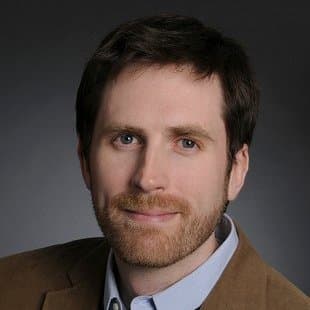
I'm originally from Minnesota, I was born there. As a kid, we moved around quite a bit. I have lived in New Jersey for a while, and Dallas, Texas for a while. I ended up back in Minnesota in high school. So I've lived in a lot of places just before graduating high school. And then I went to college, for my undergrad, I did a degree in engineering at the University of Wisconsin, Madison. I worked for a while in the East Coast as a management consultant. It was the late 90's, and anybody who knew how to code, could get a job as an IT management consultant. I worked for Anderson Consulting, but then it became Accenture, which is what it is today, primarily, in the telecom ministry in Boston and New York, so I've lived out there. I've traveled a lot to all parts of the country, not only on the East Coast, but also some parts of the West Coast. I went back to Minnesota for graduate school, and after I finished my PhD there, I moved to Washington DC. And then I was at the University of Arizona for a while, so I've lived in Tucson. And now I'm in Atlanta. Along the way there, I met a woman who became my wife. She's from Atlanta, so I'm very happy being at Emory University, but also happy to be in Atlanta, because it's her hometown. We have some good family friends here already, so hopefully, we're not moving too much again, at least we don't plan to. In terms of things that I do outside of being a professor and work, I have two young kids right now, a three year old and a five month old. That takes up a lot of time, but it's a lot of fun, seeing them become little people. Sports wise, I've played soccer my whole life. I do a lot of skiing, running, exercise and those kind of things. I love movies, TV, reading. I read a lot of dirty sci-fi novels. So, I don't do crazy activities like climb mountains, or go for 100-mile bike rides, but I enjoy typical outdoor activities.I have a daughter, she’s five and a half months right now, and I have a son who’s three and a half, it’s a lot of fun at home. She was born in the fall, which is my teaching semester, so it was a really crazy couple of months at the end of the fall semester. But now it’s nice, I’m not teaching this semester, so I’m able to manage everything with more flexibility than I had before.
At Emory, I’m in the business school, which is a separate college, within the Emory University. Emory University is a private school in Atlanta, well known for its academics. We have a very strong liberal arts college, we have a very strong business school and other professional schools. Emory is also pretty well known for its medical school, its hospitals. So there’s a lot of different ways to think about the identity of Emory. We do offer what you would expect from an undergraduate business degree, from a school that’s in the top 15-20 schools in the country. You have your core classes and things you would take. We also offer lot of flexibility in where people decide to concentrate. Emory is set up so that the business school is a department, so you get a degree in business but you don’t major in accounting or finance, you major in business, but then you concentrate in those areas. It’s kind of interesting that students have the ability to do a lot of concentrations. They can do a Concentration in Finance, or in Information Systems and Operations Management, and other areas like that. The area I’m in, specifically, is Information Systems and Operations Management, so it’s all the technology and processes and systems that run businesses and markets and make businesses work the way they do. Our students learn general things about how business operations and technology work, and then we have a lot of interesting technology courses, on app ecosystems and coding and design. We also have some courses on data analytics, which is a real big area for us right now, at the undergrad level. We have several other interesting electives across things like, technology and society, more things in operations side, supply chain management, all those things. So, we offer a lot of what you’d expect in a business school if you’re focusing in Information Systems and Operations Management. In terms of graduate programs, we have traditional MBA, we have a top-20 full time MBA program which we are proud of. We also have evening MBA, weekend MBA and some executive MBA programs, so all MBA degrees with different flavors of how you can experience it. A new program that we’re going to start our second year in, which I’ve been involved in and has been really fun, is Masters of Science in Business analytics. This was our first full academic year of that, and it’s gone really well. We have great students, we’re placing them in great schools and it’s been a lot of fun. So it’s a full Masters in Science program, not an MBA with a concentration in analytics. I teach a Data Visualization course in that program, you go through some boot camps in coding and technology, statistics. Then you dive right into Business Analytics, Machine Learning, Data Visualization. You take courses in Social Network Analytics, Sports Analytics. There are some different electives that go into functional areas like HR Analytics, Marketing Analytics. We offer this great capstone project in our masters program where students are put in to use their work with real clients on projects with real data. For example, we had some students working with Ceaser’s Palace this year to try to figure out how to help them deal with some of their customer data from when customers check in, and try to make some sense out of it. So it’s a good program, it’s one year long, it’s our newest graduate program, that’s doing really well. We just finished our round of applications for the upcoming fall, we had close to 900 applications for 40 to 45 spots. So it’s competitive, and I think all programs are pretty competitive. And we also have a PhD program, which is a business school wide program, but then students come in and declare what area they’re interested in, whether they’re in Information Systems or they’re in Marketing or something like that. And our PhD program is small by design. We typically admit one to three, at the most, students per year. We average one to two per area, it's a nice, small cohort. They get a lot of good interaction with the faculty and with each other. One of the things that’s interesting about us is that we have a partnership with Georgia Tech, which is right across town. Our PhD students can take courses here and at Georgia Tech for further development. For example, if you want to take some sort of matrix course that doesn’t operate at Emory, some specific type of estimation, and if you find it at Georgia Tech, you can go over there and take it and that’ll be part of your degree requirements for PhD. One thing that’s quite unique about Atlanta, is that we’ve got three or four really good schools, all within kind of equidistance. We have Georgia State, which has a great business school, we’ve got Georgia Tech, which is well known for all sorts of technical things and a good business school. At Emory, we have a good business school, and then not too far away, we have University of Georgia, which has a great business school. So within 60-80 mile radius we’ve got four really good universities. There’s a lot of cross-fertilization which happens between the students which is nice.
In terms of applications, if you’re interested in the programs we offer, you should reach out to whoever is listed on the website for the program you want more information on. It’s usually one of the coordinators or directors of the program. We’re very good at communicating with prospective students across all our different programs. I would say that our program offices are very high-touch and they want to get to know prospective students. And then there’s, of course, your typical application process, you go through a set of material you have to submit, and an application format you’ll have to fill out and submit, nothing too different from what you’d expect in most other schools. But there are more than one program offices to communicate with. So reach out to the program office, if you have questions about the curriculum, admissions and all those things. If you have questions about specific courses or specific topics you might be interested in, you can also reach out to the faculty directly. We’re listed on the website for the school and our contact information is there. If the student is really interested in something and wants to find out more, it’s oftentimes good to just go and ask the professor that you think you might be interested in taking a course from, to find out what their opinions are about things. In terms of misconceptions, I can’t think of any strong ones. It used to be that you’d have to do more to attract female students to more technically oriented topics, but I don’t think that’s the case anymore. For MSBA, we have a good 45-50% of female candidates, and I see it as continuing. We get a lot of international applicants for our graduate program, our MSBA program and I would love to encourage more US undergraduate students, or students coming out of high school, that are interested in technology to apply for degree programs in technology related topics, whether that’s Computer Science, Information Systems, Data Analytics, etc. There’s a big demand for those jobs, and I think we meet a lot of demand for those positions with international students, but we could fill more of those with domestic students, from the United States, if there is more interest.