
This is software (AWS) generated transcription and it is not perfect.
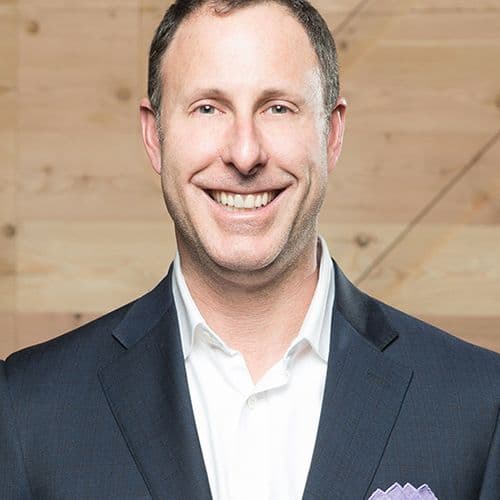
So my story is unique, like all of yours. And it started out. I grew up in Brooklyn, New York, on bond to a family of two older sisters and mom and dad. My dad dropped out of seventh grade, couldn't read. I was in and out of jail most of my life and grew up on welfare and food stamps. But I realized that education eyes the great equalizer in our society that if you get a great education and you work hard, you could change your lot in life. And what I always tell my three teenage boys is they could take your job. They can't take your education and don't ever let them take your self worth. And so from there, his first generation to go to college, and I was fortunate to attend Carnegie Mellon University, where I double majored in business and economics and minored in Russian history. And from there I did a quick stint on Wall Street and then strategy consulting. Then I went back to business school at Harvard, and when I graduated, I went back into consulting but started the media and entertainment strategy practice at Accenture. And this is in 1996 and my clients were traditional Hollywood companies, information services companies and publishers. And then quickly this thing called the Internet started to take off, and I became the firm's guru around the Internet, helping everyone from McDonald's, Wal Mart, Canadian Tire two Cartier and Simon and Schuster figure out what their Internet strategy should be. And then I went on to a Siris of startups on DSO sold one of those startups, Toa Alta Vista, which was, you know, large search engine and moved out west to San Francisco in 1999 during the very first dot com boom and got to ride the wave at Alta Vista. And then the bubble burst and I went to a small company called eBay as an early executive. And then that blew up to be a huge success. And then, from there I left after four years to be the CEO of Shutterfly. When I joined, I had 103 people. I had about eight million in the bank, losing 20. We were about to go bankrupt and over journey of 11.5 years through the amazing um uh, team orientation of the folks that came to join me on the journey. We built it into the fifth largest e commerce company in the country and were recognized as one of the 20 best places to work in America three different times. So it was a huge success. I took the company public in 2000 and 6, 18 months after joining. And then after that, I became a venture capitalist that Softbank the Vision Fund, the largest venture capital fund in the world, with more than $120 billion in assets. And today I invest in technology companies across consumer and real estate. So companies you may have heard of like Door dash, open Door Memphis meets Alta Pharmacy, to name just a few. So that's the career arc. But there was no one right path. There's never your careers air, almost never linear. It was through learning what I enjoyed being a business person, being a leader, building brands and creating products and services that touch consumers hearts not just their pocketbooks and being surrounded by super bright people who are high integrity, um, ambitious, incredibly bright, hard working, low ego and team oriented
So what? The Vision fund. We look for amazing entrepreneurs who are creating entire new industries through technology, particularly artificial intelligence, machine learning, computer vision, or are disintermediation the established players Door Dash is an example. Uber slack. Bhikhu sense time thes air. Some of our investments. How minimum check, um, is $50 million. So we tend to focus on mid stage toe late stage companies, though about 20% of our investments are earlier stage on DFO. For me, some of those they're always stage bets or companies like Memphis meets that air. Developing lab based proteins, or plenty that's doing vertical farming have the ability to be incredible companies, but also to have a positive impact on on our planet. So what I look for is large Tam's amazing founding teams. Big ideas, but the ability to execute a discipline around profitability, the ability to track talent around that mission. Companies that and leaders that will build great cultures, positive unit economics, great business models and a global perspective
Yeah, I've looked at a little over 800 companies and invested in 17 of them, and I don't think any of those came. There was no information in the first email. Like the emails. Um, it kind of gets lost. I get somewhere between 812 100 emails a day. So if you want to reach a venture capitalist, the best way is to get to somebody who knows that venture capitalists. So if I get a text message from ah, Professor, an investment banker, another venture capitalists and entrepreneur Ah, friend who says, Oh, my God, Jeff, you got to meet this guy. RoWhite. He's so brilliant. And he has an amazing idea. He really liked to grab some time. 99% of my interactions come that way through networking. See their phone call to me or a text message. Most emails to venture capitalists that go into some general, um, cool and are often not red. But I'd be short and succinct and to the point, and I would bring home quickly What? Your ideas who you are. Why do you think this is a fantastic idea and a request for a 45 to 60 minute meeting