
This is software (AWS) generated transcription and it is not perfect.
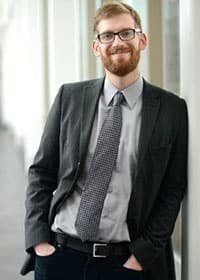
Sure. I'm happy to participate, so thank you for inviting me. To the question of where I'm from, I was born in Toronto, Ontario. So I'm originally from Canada. I've lived only in North America, but aside from Toronto, I lived there for the first twenty five years of my life, I've also lived in Ottawa for a time, the capital of Canada. I then lived in Philadelphia when I was working on my PhD. And now in Minneapolis for the last five years. As far as what I enjoy doing, I am an avid motorcycle rider. So this past fall I acquired an electric motorcycle which I like riding. It's sort of a commuter vehicle for me. I also enjoy travel, movies, restaurants, trying new food, things like that.
So, undergraduates at Carlson, so there is a core major in IS. I can't speak to the entirety of the content, but I did teach in the undergraduate program myself for the first few years after arriving in Minnesota. So, I know our bachelor degree program sort of exposes students to various core optics and information systems, as most do. So things like systems analysis and design, which I taught myself. There are also other courses on ERP, introduction to programming.There are now introductory courses on machine learning and predictive modeling. So we actually have a new undergraduate minor around data analytics that our department has launched of late, which includes a number of things beyond predictive modeling, as well as data visualization, data management and things like that. As far as our graduate degree programs, so we have a presence in the MBA program course, I also teach that now. Beyond that, we have masters of science in business analytics degree, which is in its third or fourth year now, and it really focuses on educating students on sort of data science techniques to place them in positions where that's heavily involved. As far as the jobs that our students are typically getting out of school; the undergraduates are really heavily focused on sort of degree or positions as analysts in companies, often in management consulting firms or technology consulting firms. That's really where our core group go. And our MSPA students are running the gamut, so they exclusively end up with data science roles but across a wide variety of industries.
So I'm thinking I'll speak specifically about the doctoral program, because I have more experience with the admissions there, because I did serve on the recruiting committee for a few years for our PhD program. So for a doctoral program in particular, the presumption is that students have some interest in looking at research questions that are tied in some way to management and design of IS or technology, that's fairly broad I think. How you go about addressing those questions isn't really set in stone up front, so I would dispel any misconception that there's sort of a hard requirement that you have to be extremely good with mathematics or econometrics or statistics or anything like that, or that you require the ability to code. The idea is that as you progress, you will pick up the methods you need to properly conduct research in our program, and you'll get that from around different departments in the school. There's a lot of freedom to explore course work beyond core requirements, so you will be required to take courses in econometrics and stats. But you can go on trying to get some more experience with experiments with design, with qualitative research. A lot of methedologies are totally open here. So really it's more about being self-driven, having an inherent interest in the topic and being willing to learn, is really the focus.