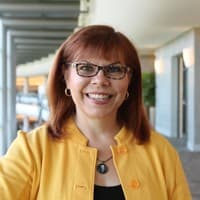

This is software (AWS) generated transcription and it is not perfect.
Journalism major was my undergraduate degree so I knew I wanted to do something that tapped into that skill set and I was working in advertising, that's when it became clear that I was on the wrong side of the table. I actually wanted to be on the client-side so I applied to graduate school, went back and got my MBA and when I had completed that degree, the question was what type of company I wanted to work for and I think this was really something that a of people should pay attention to. I had a business degree, but I did not have an accompanying area emphasis and I knew that it just didn't matter to the world if we had another flavor of spaghetti sauce so that was my own feeling. I'm not putting down the people who work in B2C, but that's for me was what led me to a B2B environment and I got lucky in that one of my first jobs. I was working with Telecom and I got hooked on technology, and from that point on my trajectory was set. My advice to someone who's getting a degree in business or in journalism or in law, whatever your degree is, get a minor something that really sparks your interests and makes you want to go to work every day So you're not just going to be a lawyer? What area of law is interesting to you? Is it real estate? Is it entertainment? Do you want to be a litigator? If you are going into business, do you want to work? B2B or B2C? I think this is what's going to set you up to be the most successful.
I work from Home Office and I love that part of It SAP is a global company so even when I have to travel for personal reasons, I am able to keep up with work, there is a danger there because we haven't always-on business and we hire a bunch of Type A personalities, so it's easy to get consumed with work. Day-to-day, I do use my journalism degree in marketing I'm either writing or editing or helping to shape the story because it's not about giving facts and figures to our customers, It's about walking a mile in their shoes and understanding what they need to accomplish with our software and portraying that story for them and I also use my organizational behavior skills, I use my finance skills, I manage a fairly significant budget and you can't take that lightly. I work across teams, so we have 1,10,000 employees at SAP and we work with more partners than I can count, so it's not unusual for me to have a project I'm working on I'm either leading it co-leading it or I'm a team member where I have to work with maybe sales and finance and our operations team or I have to work with someone who represents different geography. I work for North America and for us we do have to segment down by the language so North America for us is U.S and Canada, and it's not unusual for me to have to work with folks who will need to translate or who have different tactics that are successful in their regions, the people in Singapore or in Africa or in Ireland think they just market differently than we do. They market differently from the way we do and so I have to constantly consider what tactics are going to be useful, do I need to write a white paper? do I need to record a webinar? do I need to bring customers in to tell a story in a video? do we need a social copy? social media copy in the end how much this is going to cost how long is it going to take and we use an AC model and that's our ACI and it means who's responsible and I just blanked on what the C is for, but you get the idea is that you have to project manage every single thing that you do so a lot of my day is spent on reporting where are we in terms of getting something into the market or if something is in the market, how is it doing, do we need to change it, do we need to stop it, do we need to double down on it and when I do travel, it's usually for something that cannot be accomplished virtually so we are a technology company. We drink our own champagne, so we use our own tools and we are able to connect with colleagues and customers and suppliers and partners all across the globe at any time. I have done business calls at nine o'clock at night I have done business calls in six in the morning and my colleagues do the same so weekly hours are a little bit in flux. We hear a lot about work, life balance, there's no work-life balance, guys It's a work-life blend rate so if I need to take time off in the middle of the day because I need to get my teeth cleaned or I need to have to run an errand, you have a doctor's appointment whatever the reason may be, it's acceptable because what we're really concerned with is can you get your job done on time on spec on budget and so if you need time in the middle of the day, I just told you we're working in the weekly hours of the morning in the evening so we can be flexible with people as long as we're all responsible adults getting our jobs done, then we don't have to be as much of a slave to the clock as probably historically, we would have been.
I work with a lot of marketers but I also work with people who don't do market so we work with salespeople because ultimately that's what everybody's in business for is to sell something. It's a service or a product or a combination of the two I work with the finance team because they enable us to show the return on investment for any project we work on because they have all the tools and they help us with making sure that we are following the generally accepted accounting principles so you'll probably hear GAAP generally accepted accounting principles so I worked for the finance team a lot. I work with operations so the actual How do you get an email at the door. I've already said that I can write but I already have a team of writers and editors who have been trained in how SAP positions are products I can always do the first draft but I always have to run it through that team. If we're doing a video, I have to work with the video team of the production team and they'll do the editing or maybe I have to go out and hire talent. I want a professional voiceover person if we are trying to do the reporting, we have a whole slew of people, data analysts and all kinds, we call it the Business Management Office(BMO) and they help us in pulling the results so all of our campaigns were tied to a code. Each code is obviously unique they help us to pull the results that our associate would do so we do have teams of people who specialize in social media, I can do some of it but then there's some that require specialization, so all of these air opportunities for interaction with other businesses we have the innovation office so maybe I need to go on and work with one of our thought leaders to create the story the right way and trying to remember approaches that are effective and working with them. They're people so just as I would never expect them to be able to do my job because their expertise is not marketing, I don't expect to be able to do their job and so as if we can give each other a heads up, that we're going to need something that obviously is helpful but I think we all kind of understand that fire drills happen and so when you need something in a hurry you have to be polite but you also have to be really succinct. This is what I need, this is why I needed and this is when I need it and could you help me figure out how to get this done because nobody is cooking it up themselves, nobody gets up in the morning and says, How can I make somebody's life miserable? Typically, we all know that it's a phrase and we use it sort of jokingly, but it really does encapsulate it. It's one team, one dream, we're all working to the same end goal. We're all working to make SAP the best company that it can be and it's not just because we all want our bonuses, we want our bonuses but there's a sense of pride and working for the best company and It's no fun beating up on the folks, the companies that can't compete with us but it's a lot of fun when you have a good competitor and you win, so that's why we kind of laughingly say one team, one dream, but we all very much meaning.