
This is software (AWS) generated transcription and it is not perfect.
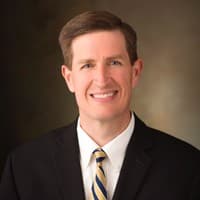
My personal story involves me growing up in the Salt Lake City area, I went to Brigham Young University. I studied economics in my undergrad, had an entrepreneurial experience while I was a student. That really influenced me and, enabled me to start understanding aspects of general management and aspects of running a business that informed the rest of my career over the next 25 years. That experience has been impactful and positive. After I graduated from BYU, I spent a few years in strategic consulting with the Boston Consulting Group, after that I went to graduate school at Harvard, graduated with an MBA, and then spent the next decade of my career in large, publicly-traded technology companies and that was a great opportunity to understand how to scale at a really significant level, then tried the investing side of the business for a few years. That's where I got introduced to Health Catalyst. That was almost 10 years ago that I met the two co-founders and at the time of my introduction to Health Catalyst with the two co-founders and one employee and we were fortunate enough to become their first investor. About nine months later, some other investors became interested and asked me to come on full time in this role. And so I've been in this role at a company-wide leadership level from that point till today and it's been a wonderful experience to experience everything from a really early-stage startup with less than a million dollars of revenue and just a handful of employees to being a publicly-traded company with over a 1000 team members and about a $1.5 billion valuation and everything in between has been really fascinating and interesting and I'm grateful for earlier career experiences that help to prepare me for all of those scaling challenges, so that's a little bit about my personal story.
So in the role of CEO of a large organization, my primary responsibility is the general management responsibility. So I need to help our organization be successful across every major functional area. That's one of the positives, as well as one of the challenges of a role like the CEO role. The positive being it's a fascinating role. I'm never bored in the role. In fact, I have to think about functions like finance and sales and marketing, product development, administration, people related items and have enough understanding of the key issues across all of those dimensions to try to be helpful, but primarily a lot of what I have learned over time is the importance of finding really, really capable leaders that I trust deeply as well, that can lead out in these functional areas. And then my focus becomes, how can I help them be successful? What can I do to remove barriers that they may be facing or help them overcome challenges? Rather than me trying to own those functional areas, especially as organizations grow in scale, you realize the importance of enabling others to be great leaders, people that have strong capabilities and that you trust deeply, and then your role is really they just help them be successful and remove barriers
So every role at every level and every part of an individual's career experience includes trade-offs. So there are positives and there are challenges with every role. And I think one of the most important pieces of career advice that I might share would be, have a clear view of those trades. What are the positives and also what are the challenges? There is no job in my experience that doesn't have both positives and challenges. In this particular role for me, some of the positives include the interest level. I'm never bored. It's an incredibly intellectually stimulating role because you have to work across so many different functional areas. It's a very impactful role, especially as it relates to our team members. There's no role that can be more impactful, in my opinion, than this role in being an advocate for team members and having the ability to affect real positive change for team members. So those are positives. But there is also a real challenge. One of the single largest challenges for me is just the size of the job. In many ways, I believe that a CEO role in any company of the size and scale that's a high growth company is in some ways impossibly large, that there's always more to do, and there's always more that could be done that is actually possible. And so the challenge of that reality becomes, how do I prioritize, what is most important? How do I personally manage this sense of ongoing failure to do everything you possibly could do. How do you achieve and maintain some semblance of work-life balance? That's a real difficulty as well, in this role and how do you manage the level of pressure and stress associated with a role like this one? Those are all really significant challenges and there aren't easy answers to it and part of what I have learned over time is first how important it is for each of us to realize we're not superhuman. We're all human. We have imperfections. We have limits, what we can achieve, and embracing that. The reality of our humanity and everyone else's humanity as well, I think, is an important context and then trying to do our best within that context. Within those constraints and find balance. One personal example for me in trying to find enough work-life balance to make this sustainable is I've developed a personal daily dashboard of important items in my personal life that if I weren't tracking them, I would likely neglect them and I've learned this through experience, and they're things like getting enough sleep at night when you are in an impossible role, where you could always be doing more, It's really easy to get carried away, where in the near term you can get away with that. But as you burn the candle at both ends, you find and I have certainly found that my overall effectiveness goes way down if I'm not attending to those sort of self-care items. So that's now on my daily list of items where I try to make sure I get it least seven hours of sleep each night, and I find that I can push more and be more effective in this role that I do have, likewise, personal relations are often areas where we can neglect to invest in those personal relationships when we allow our job to overtake our lives. And so for me, I'm about to celebrate my 25 year anniversary to my wife, and one of the ways in which we keep a close relationship is another item on my daily dashboard is to spend an hour every day visiting with my wife, and I found, If it's not on my personal dashboard, it's so easy to neglect and any one day where that might happen, you might be okay. But over sustained periods of time, that really erodes our personal relationships. And likewise, I have specific goals with my kids. I have four kids and it's really easy in our careers to neglect those other parts of our lives that we actually really value and are really important. But putting some structure around it, measuring it, holding ourselves accountable, to find that the right balance has been one of the solutions that really helped me. I'm certainly not perfect at it, but having a dashboard helps me see when I'm veering off a little bit sooner than I otherwise would realize. And it helps me course correct.