
This is software (AWS) generated transcription and it is not perfect.
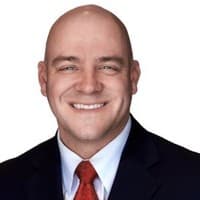
I started off my undergrad not exactly knowing what I wanted to do. A good friend of mine who was a professor down at the university that I attended San Diego suggested that I should speak with one of his colleagues who was a former executive that Pepsico, Taco Bell and so as I spoke with him, he asked me what was I interested in? I said that I was interested in business generally, and he said, if you're going to study business, you should study finance or accounting so that you can have a foundation in the numbers and you can read financial statements so that kind of started mentorship for me with this professor, it was great and I trusted him. So I started off on the finance route ended up in an audit class where my professor at the time said you should think of the Big Four. I wasn't sure what the Big Four was at the time and I'm familiar with Final Four basketball, college basketball, but not Big Four. So I actually applied for an internship at PricewaterhouseCoopers in San Diego and spent a summer there and then decided to go full time. All that being said in the back of my mind, I always had an interest in human resource management in HR and so during my undergrad, I took some of those classes and long term kind of felt like I'd end up somewhere in the HR world but I had this great opportunity in front of me and PricewaterhouseCoopers as an auditor and so, starting off my career, I started it as an associate in the San Diego office. My primary client was Sony Electronics, which at the time was about 13 billion in revenue. I think it's shrunk since then, but it really did provide me with a good foundation of going into different organizations. As I said, Sony was my primary client, but I had others, smaller ones, mortgage companies. So it gave me a good diverse experience with different site companies and I realized that one of the things that I like to do is study organizations and more the people side of things because I had kind of found myself in the niche in accounting. Everybody looked at my resume, Big four, it was hard for me to break into the HR world. I applied to grad school a couple of times. I was accepted to a couple of programs one at Columbia, the other at Purdue turned both opportunities down and continued for a few years in accounting. Eventually, I ended up any compensation role which seemed to pair well with my accounting and finance background but also put me into the HR track and then so I did mergers and acquisitions the company that I was at in San Diego was a life sciences company, and the CEO was growing the company through mergers and acquisitions. So my responsibility was to be the HR compensation partner with a lot of these acquisitions. So gave me exposure to HR, but still kept a lot of those finance and quantitative skills fresh. Eventually, I should say at the time I took a certificate program in HR in parallel so I could get more HR training and start to position myself a bit more in that area so that I could get into a career full time in HR that led me eventually to Goldman Sachs. This professor of mine took a position here in Utah, a professor position here in Utah, and put me in touch with the recruiter, Goldman Sachs where I spent four years as chief of staff for the technology. During that time, I decided to pursue an executive MBA program at BYU so I did that from 2014 to 2016 and then that chief of staff role a lot of my responsibilities were very much HR-related employee development, trying to do more in recruitment. We were struggling to get our story out in the Utah market that Goldman Sachs is a great destination for engineers and technologists. So one of my responsibilities would start to build partnerships with the universities but once I finished my MBA, I still wasn't necessarily a dedicated HR role. I will just as a side if you look back through my career when I wasn't reading for pleasure or what I did read for pleasure was related to HR and my father has a background in HR and labor relations as a labor relations attorney so, at that point, I realized this is probably the best route for me. At the same time, I was very appreciative of the fact that I had an accounting and finance background so that I could speak the language with OPS, finance, and accounting and so on and so forth so that brings me to where I am at currently, I'm SonicWall. SonicWall is a cybersecurity company based in Milpitas, California. We have a remote HR team here in Utah, our head of our chief administrative officer, head of legal and HR are based here and that is how I found out that job. He moved into my neighborhood so we got to talk one day and the company that I'm at Sonic Wallet at the time he moved here, had split from Dell, Software Group, and it was purchased by private equity firm Francisco Partners. So my role today is fully full-time HR, it's been a little bit of a windy road to get to where I'm at and I shared the background just because sometimes it's not a linear path but ultimately where I'm at where I wanted to be and I cover basically all of our HR operations and all the HR responsibilities outside America and we're in 36 different countries.
I'll start with the weekly work hours, typically, I'm working probably 70 to 80 hours a week because we work at private equity for a private equity company, we run very leanly our focus is on top-line growth, showing growth and managing our EBITA. My responsibilities, they vary, in most organizations, you have dedicated teams in HR to different functions, for example, you'll have HR operations or IT operations specialists that are running the technology, the onboarding programs and so that actually all falls under me while at the same time, as I mentioned earlier, I oversee all of the international HR. We don't have business partners, for example, we don't have a business partner in Europe, so I'll cover and be the business partner for Europe. We do have some help in Asia, specifically in China, and we have an HR business partner, a junior-level partner in India but ultimately, the HR responsibilities day to day employee relations you name, it falls under my stewardship. As far as the daily decisions have to make terminations, we have to understand the local laws in all these different countries and if we have to terminate employees rather for performance or restructuring, those are decisions that I confront every day, how do you terminate somebody in France or Germany? and have to understand those local laws and make sure that we don't run afoul of local legislation. Other decisions are like performance management, how are we going to deploy launching deploy performance management and so I oversee that process. Now that we've built an HR team here in Utah over the past year, I've been able to delegate some of that responsibility but that still comes into my area stewardship. Other decisions, I just got off the phone right before this interview with our head of sales. So we have to look at the budget for our headcount and also see how that matches up with our revenue projections. So we're close with our head of sales and finance to make sure that we are getting the best return on our investment meeting our investment in our people so it's a daily lot of decisions every day. I was commenting to someone that sometimes I've got to make a decision of what to do said a termination in Germany. How did you do it? What do we need to do and then turn around and make a decision on whether or not we're going to retain someone so it's quite a bit of responsibility in this role.
Some of the tools that we use, we have an HR information system. This is our employee record system, where it maintains all of our compensation, personal information, you name it whatever it relates to the employee's record we used the HRIS. We have created some proprietary tools working closely with our engineering team internally, with our HRIS, it's very limited. When I came on board, we were actually using the DELL system originally, but because we split, we had to get our own, and a decision was made to go with a small, inexpensive platform and fortunately, that platform is good for a North American based company with 500 employees, however, we are 1600 employees across 36 countries, and so we had to make it work. So what we've had to do is really work with our engineering team to do some back integrations with salesforce, Concur is our expense traveling expense platform and then we've had to create some proprietary tools for onboarding, offboarding, and we recently created some dashboards and power BI because our tool is not sufficient to be able to provide that kind of tool. So those are some of the main tools we use, of course, Excel, Microsoft team have become internally very helpful for us to collaborate and then we just got other HR platforms. Cornerstone, which is a learning management system and both performance management and pay planning. We use that primarily for performance management pay planning. We also have some other tools, such as to Payfactors that help us manage our compensation and benefits data. Externally, we also leverage a compensation survey called Radford. Radford is known as the kind of gold standard in the compensation survey market. We use that to ensure that we pay employees fairly, and we recently switched to Radford because 90% of our competitors use it so we want to make sure that we're comparing apples to apples with our competitor's pay.