
This is software (AWS) generated transcription and it is not perfect.
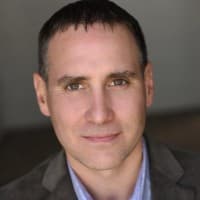
My story, I wouldn't say is necessarily a traditional career path. I came out of Indiana University from my undergrad and graduate degrees and I started my career in sales. Actually, I ran a painting business while I was in college, and, I was intrigued by the opportunity to frankly make a pretty high income coming straight out of college as an undergraduate degree. That's the path I pursued. And it was a very positive career path for me. For about 10 years, I spent time at some large organizations and handled corporate sales. And, after about 10 years, though, I decided that I wanted to make a bit of a pivot and do something a little bit different. Get a little bit of weight from or get away from sales and get more into a consulting role. So from there, I started a marketing services company called Valassis, and I worked with that organization for about five years in a consulting ted capacity, and I helped organizations and companies put together marketing strategy and marketing media plans. I took a very analytical approach to media segmentation, customer segmentation and developed a lot of marketing models that would help to drive and optimize ROI in the marketing space. And after doing that for about five years, I had an opportunity that came my way to work and take some of that consulting experience as well as my experience and technology and moved to a consulting and advisory firm called Gartner. One of the most acclaimed and renowned consulting advisory firms in the tech space as well as in the supply chain space. And I spent some time there consulting and really driving engagements with the top 50 Fortune 50 companies. I learned a tremendous amount and I was able to really sharpen my tools related to the technology and supply chain. Then after spending some time at Gartner and actually picking up travel quite a bit more than expected, I ultimately made a step forward and came over to Walgreens, and I've been at Walgreens for the last roughly almost eight years now and have spent time taking experience I had in marketing and working with CPG companies and started a track what's called merchandising and category management, where it's a general management role, where you own a PNO. Those who don't know a PNO, it's you own the financial inputs and outputs and deliverables for a business unit. And so I manage anywhere between 800 million to a $1B worth of a business unit over a PNO. And I've done that for about seven years within Walgreens. Really exciting, really exciting track, able to work again with a lot of different CPG companies and drive innovation of market at the category level. And then, for the past two years, I was asked to come over and even put more of a focus on the innovation side of the business and develop more of retail. We're changing the face of retail for the most part in the drug channel here at Walgreens and that's a lot of that work is what I lead. CPG is consumer packaged goods, and it's probably best told by example Craft Kellogg's, Unilever, Nestle all those large companies that make up the food that you'll find in a grocery store or any other food outlet, those are CPG companies.
My responsibilities are pretty vast. As I mentioned the last couple of years here, working at Walgreens. I work on the development side of the business, and I manage innovation through the organization and whether that be through stage gates within governance or whether that be the development of a concept to a pilot to a test and then to a market rollout. That's really where my focus is today within the innovation and development space here at Walgreens. But, what that turns into is a lot of peaks and valleys as far as a typical workday. In some instances, during a roll-out, your days are long and challenging, and you're dealing with some highs and lows throughout a day where something works and something doesn't and you're doing a lot of troubleshooting. In other instances, as you maybe come out of a rollout phase, you're working more along the lines of concept development and what it takes to move those concepts through an organization to gain alignment across a large company like Walgreens. It still requires a lot of hours, but it's just a bit of a different type of work, and then you take both of those different types of work and you always have something going on in both cases. So you're kind of splitting your day in certain instances in your hours, in certain instances, shifting from one topic to another. So it could be, it can be exciting and interesting and challenging all at the same time. As far as hours, I look at and I would encourage others to look at their hours in a way that isn't necessarily counting or paying a whole lot of attention to the time but paying more attention to the work that needs to be accomplished. And sometimes that means you don't leave the office till seven in the evening, and typically you get in the office anywhere between seven and eight o'clock. So there's going to be pretty long days, and it depends on how you want to manage your remote work style. Some folks might have traffic to deal with, so they might head home early and work from home for a few hours. I think there's a lot of flexibility. The company I work for, enjoy a pretty significant amount of flexibility. I think a lot of companies are evolving in that fashion. And so work is becoming much more ingrained within what you do all day. So I'm not quite sure the hours, frankly, right. I think there's quite a few of them, but it's really just part of what I do on an ongoing basis. As far as other things like travel and I mentioned the working from home piece. But travel, It comes and goes right. I think in any given month I'll travel 3 to 4 times, and that's usually for a couple of days at a time.
I would say that there's a split in any organization between homegrown internal infrastructure tools that are unique to your organization and then those that are more commonly used across the marketplace. We're currently going through one of the largest, actually, the largest SAP integration here in my company and so SAP comes up now and again but just depends on your role in what you're doing as far as whether you integrate into those into that platform. We often use homegrown systems that look and track sales, that look and track volumes of certain programs that we're doing. So there's a lot of things that have been built for the specific needs of the organization that we use probably most frequently. On top of that, we're constantly in the retailing. We're constantly looking at what the consumer wants and is doing. So there's a tremendous amount of focus on what we call the third party syndicated data, and so I'll take a look at things like a Nielsen treasure chest or an IRA database to try and understand like what's the shopping behavior of my consumer and how am I appealing to them, or do I have gaps in the performance of my business based upon what others are doing in the marketplace. So there are a number of different analytic resources that we tap into and often times those are done and available to us on a global basis throughout the organization. As far as whether I prefer one or the other, I wouldn't say that necessarily I prefer one or the other. I prefer the one that I know how to use the most. I guess you could say, and then those that are a little more foreign to me, probably one that I shy away from, for better or worse.