This is software (AWS) generated transcription and it is not perfect.
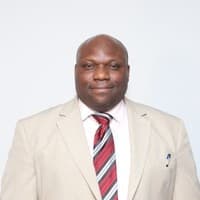
you and I'm pleased to share my story. My name is Bobby Jefferson. I was born in the Bronx, South Bronx. Yeah, it's a very tough neighborhood in New York, and I was very fortunate to attend a magnet school in New York City called Brooklyn Tech. Uh, Brooklyn Tech is one of the three top schools in New York, and I studied engineering, electrical engineering, and high school is an excellent education for me because they expose me to technology. And I was a resilient kid trying to always find out how to use computers how to use electrical engineering. So I stayed in the lab in the computer lab. Are, you know, working extra work extra hours, So always appreciate with, you know, very solid high school. Um, time I then graduated, attended and graduated American University. So American University had great professors. Ah, tell professors in Washington D. C. I give tribute to good professors because that helped me to, you know, have really good at to get physics and computer science classes. And because American universities also international ticks and Russian studies classes. So a lot of international development. So that exposed me to both you know, hardcore computer science, physics and international development. Ongoing American allowed the opportunities that I encourage students and others, which is internships. So I did an internship at IBM. So for IBM and internship in White Plains, they are, And then the number of internships around D. C. And then I started traveling, so I started traveling for work, and that was fantastic. Uh, well, I started working for US Aid, International development, support that USA I I went to like Tbilisi, Georgia. Uh, you know, caucuses and Georgia has fantastic food. And, uh, you know how Jubouri and Armenia and so went out to the beautiful churches of Armenia. And this was because we were fearful of something called y two k eso back in those days. You know y two k. You know, you have to get prepared many years before the year 2000, and there was a lot of remediation that was going on replacing, checking, fixing. So I did a lot of y two k re mediation in the former Soviet Union during the Ukraine Moldova. And so that was you know, So I got to learn the culture of the country and and support many of the hospitals. So, you know, it was very important. Of course, for right today that the hospitals, we're going to be safe. We didn't know, right? If you remember for those days were you really know what was gonna happen And white, you can. You just said the world was going on and so, you know, computers, You know who is a mediation for many, many countries on DSO It allowed me to live there. So I lived in the country's for, you know, 18 months, one year at a time. So I got to learn the culture of the people and the food. And so that helped, uh, influence another part of the work that I was involved in was that the U. S. Aid had this initiative called the Leland Initiative and it was introduced Internet for the first time to to countries that never had Internet before. There is a lot of course today. Countries, you know, just automatically have Internet. But in those days we have a Z U S. A project introduced internet to Eritrea. My words working in Ethiopia on dso we were, you know, ensuring I was working on these big you know, land sat aids, you know, satellite dishes and, you know, trying to get, like, TDM a and things into, you know, getting Internet thio different. So I absolutely remember before country, many countries had Internet what it was like in deduction of internet and how that changed, You know, the transformed countries just by the by the internet introduction on a couple of wonderful books. One of them is by my colleague Darryl Cohen. He wrote a book about our journey called Development Digitization. So how do you know international development through digitalization and I c t. And you know, so you can read about that. You know, students can read about that experience attack that time. It was just, you know, we're working in. I was working on supporting, for example, like the railroads, uh, in in South Africa and railroads in Zimbabwe and the bottom Fantastic. Well, it waas Zambia and Zimbabwe. Um, they have what's called Victoria Falls. You know, the world's biggest greatest, you know, uh, waterfalls. And they used a railroad for transporting goods and services and so, you know, get internet how to foster, you know, the transfer of goods and services because you can order things and and now you can have them transported. If you have at least have something online on the website. Way worked with one company that we helped called, uh, error floor ever floor Florence. So you can order that. Say, you're a student and a Ethiopian student. You're in the us and now it's time for holidays. And so this company would do is take you. Would you do a order? I wanna order flowers for my mother, who is back in the village, Right? Because of the Internet, You know, she the every florist in Ethiopia or Eritrea to take your order and, you know, take the flowers brought into the village, and then take a photo of you family and receiving the flowers, you know, so that everyone could see on and send it back by internet. So there you are. You're a student in the US, the UK and you're far away from your family. But now you're getting at least a photo. Uh, you know of this, you know, and it's just it's just like a game changer. Of course. Now, um, you know people, the students, they do more than 10 flowers, they said, watching machines that they you know, things that the families need. So, you know, I take riel good pride in the responsibility of introducing the Internet and the businesses, and the e commerce opened up as as opportunities during that time.
So you know, it's chief technology, officer. A lot of my work in for the global health business units. I work on global health, and ah, lot of the technology has to do, of course, with digital health. So I'm involved with, you know, supporting digital health projects, lab information systems, lab projects because of cove it now, the at the moment the most, you know, covert and digital devices. So how to get PCR lab tests and covert tests and how to get these rapid tests happening quickly? Um, you know, and and in the future, you want to take these tests from home, right? You just want to be ableto have you know, a covert test on your on your phone have the result. In that way, you have your indication off, you know, covert positive or negative, and have your your status. So my role is that I work with, uh, startup companies, and I support some of the technology, you know, as D. I was supporting some of the technology. So, for example, um, number of the startups are using ai or ml image processing on your phone. So we're doing political cancer screening, So you could detect for cervical cancer. Uh, screaming on your phone. Another one I'm working with is trying to do malaria. Um, using your phone as as well, so yeah, turning your phone into a medical device The the U S. F. D. A. Has improved software as a medical device to your phone, plus your AI algorithm. Plus your software can now be an approved 5 10 K medical device and why that's important. That gives you an opportunity to use your software and your solution in the U. S. Hospitals and clinics. So if you're in India, you're sitting in Zambia, you're sitting in Bangladesh and you've got a wicked smart idea around, you know, mobile and data collection and image processing. Um, now, you know I can help you navigate of how you can get that solution to become a medically approved solution, you know, and used in the and and now, once you get a FDA or you approval that your own and your algorithm is approved 5 10 k, it gives value. You know, you have not just the research, but now from commercialization in the business side, you have to value, and I mean so you talk to a doctor in Bangladesh or I CMR in India or other places? Hey, I FDA approval for my for my solution. It gives a strong evidence of that It will work, You know, not, you know, not just za proof of, uh, demonstration of evidence of success. So I help. Ah, lot of companies, you know, navigate that and helped them to commercialize their their their their products. So my my, that shows my business style. So my business style is that I'm very open, but I have four or five business areas on one of those is s o. My former boss, Cristal Grand also created a book call the business Leader. So I had evolved into becoming a complete business leader. I was always a technical person and coming up to the technical right from I t the digital digital health. But what you really want is to be digital or technology, but be, you know, but have a broad view. Uh, that way you have an opportunity to to to manage not just the technology team, but the business came in and others. So you know So in his book, that again, I I've have given trainings on his leadership on this business leadership, which is, uh, complete business leadership model. One of the important ones is just really frank, which is individual wisdom. Do you have individual wisdom? Do you make? Yeah. Do you make individually good decisions? Do you show up on time? Do you have energy in your work? You know, do do you, you know, return people's calls? Do you just do the fundamental things that you know are important? So I try to encourage students and others in the workforce just to have, you know, the game individual wisdom, and it takes time, unfortunately, but that's important. And then, of course, in your career, you need to know how to manage people. You need to, you know, Project I t. Project management is always there. You know, if you have a software team getting managed, I t. So understanding that you have to deliver software on time on budget, you know, to clients. And that's a skill. You know. You shouldn't get how long it's gonna take you to develop software. You need to know how long it's gonna take, and it's not developing. As you know. It's about that it's test software. Yeah, you know it Z delivered that. Okay, no one wants that You. Yeah, you're on time, but the software is full of bugs and it doesn't work. You know, giving estimates following something is going to take, You know, if your again and a wise manager, you know that you're you're gonna check with the team. But your estimate is always based on that. It's tougher coding it's that's been tested. And if we're lucky at the end, maybe some documentation at the end you were good at, you know, a I can come in. Maybe that helps toe do better documentation for us. And not only the financial part is making sure then, that you know a lot of software and the testing and the digital that you know it comes in within budget or close Thio Or And if you do that repeatedly, people begin to respect your your position. If you can deliver I t projects and digital projects on time and budget A swell. So that's what I do. A lot of my my my management style of my work at the eyes working with companies and and others to help them think about how to deliver? They usually are working on the M V P product. Uh, well, they want to get it out to the mark. Uh, you know, trying to get out to the market. And but they have to realize that it's also important to get something out to the market where the baby tested. How do you, you know, developing something fancy and sophisticated, but but it doesn't feel a need and no one wants. It isn't very helpful. So trying to develop just enough and having a trusted set of people that you test it out on the market, you a be tested, make sure that it works and then adapt Just, you know, adapting change my both my management style. But this is also my responsibilities. How I work at D. Iexcellent examples because, uh, you know, prior to March, there were no cove in digital solutions that people had 10 years experience. Okay, You've got 10 years. Experience and sequel are Jason, are you know, you've got let's lots of years of space ruby on rails in terms of cove it We've only had a very short time. And so startups and and companies are adapting, um, two that are hugely important Now, um, of course covered is adversely affected. Many industries, you know, travel. But it's also given other opportunities for companies that are dynamic. So this is what I'm encouraged is really for students as well. And professors and others who are, You know, this is the time right now, um, to to create those ideas. And there is more that we need to be solved. Uh, vaccine eventually gets rolled out. How do you ensure everyone, including Children? Uh huh. And you're in different countries were in different. How do you ensure they get the vaccine? And it may be too footage. Right? And how do you go for the first shot? But then how do you? Sure, the second one. And so how do you do some biometrics. So his identity management or something that's make sure that all the population and the people are getting, you know, getting the vaccine. So there's there's, like, more room for, for smart ideas out there as well. So the home test, you know, before you getting on a plane before you get to our office. How do you How do you ensure that my test results that another organization or a group will accept the test results, Right? Yeah. So all of these for me are opportunities. I'm trying to encourage college students and others to take advantage of in terms of brilliant ideas and the airport.
as much style. What is completely influenced by if you think about the progression of I t project of I t. Person within the organization. You know, they all, you know, technology person often starts, you know, on the lower end, you know, and support user support. And then, you know, then they gradually they become, you know, maybe a team leader, leader of that team. And maybe they lead some programmers or developers who have done that. Let let development teams and programmers and try to pick together, you know, from the U A. People in the front and, well, user requirement, be a business analyst. Front end, you know, and hiring those and then putting together the U A. People database, folks, and in the back end train, um, testers and getting some good testing tools and all of us. And so you know what normally happens if you try to find one of those technology people, you promote them, and now they leading a technical team. And but there isn't, you know, if you haven't given them training a technical person, she's gone to IittIe in Indio. She's gone to m I. T in the US and She's brilliant on the technology side, but we have, you know, But I haven't great. Now you're promoted to lead the team. But you know, you don't get the training on how to lead a technical team, so that's what I do. I try Thio mentor, how to lead a technical teams. And what does it take because you're not. When you're leading technical teams, you're not writing the code yourself right? You're delegating, you're helping your doing I t project management. And so for me, it's really important t to learn how to manage people. And and that's the important part of the technology. Journey is how to manage people. Resource is projects on time. And so my colleague Chris Legrand, you know, create my former boss, you know, had a book, wrote a book called The Complete Business Leader. And that's one of the styles have subscribed to where you have your own individual wisdom and how to manage people. I t project management, financial management. So when someone says, you know how long it's gonna take to do this software that you know, you know the level of effort's going to take a swell and then if you could do that correctly a few times. Um then that begins to show people that you, you know, on the management side that you have a confidence and understanding of what it takes deliver software. And, you know, especially complex software. Whether that's Jason or react or others were a lot of testing. So you know, that way as well, I think I hopefully mentioned. I'll continue referencing other colleagues. Book? Um, a swell because it was Yeah, yeah. Darrel Owens, his development digitalization to development because, yeah, Why is that important? It's your in the where in the us and you're doing digital projects and programs. Now try to do digital projects and programs in Zambia trying to do digital project and trying to do an estimate of how long a project's gonna take. So if you're going to do covert testing from home in the U. S. How do you do a covert testing solution in Zambia and and if you say yes, we can do it Great. You're thinking how to adapt it something from the U. S. Which is 120 volts thio, the UK and others you know Zambia and in India to 20. And, you know, I'll just give a simple example that, uh, dates are always fun. Right? So in the US, we go, you know, uh, day, month, year, a soon as you leave the U. S. You know, everyone the rest of the world use month, day year, you know, they're switching around, so a good practice isn't to use like numbers. It better is to use the actual um, Dad. Yes, that is correct. That is correct. So today is September 25th. So if you're gonna do a covert program and if you you know, for the U. S, what I recommend is that they use the alphabetic. You know, September, um, as a three information because then if you want to go global, then you don't have to change anything. September 25th is the same a country. But if you're 20 or 9. 25 now, when you go to a different country or you wanna expand your solution globally, you your front end will need to change, or you've got to figure out where that user is when they're entering their information. And so it's just one of those best practices that I learned from as part of my individual wisdom. Yeah, being software teams that, Hey, if I'm gonna do something, I'm not gonna hard coded. I'm going to try to make it so that I already have global, uh, international solution in line and every software management, the work that I dio. So I'm just giving you that is an example of my personal experience. Um, because I've seen what happens when you have to go back and change the code update or say, Hey, Bobby, great. It's a great idea in the US and we're expanding. And now I'm introducing to my UK colleagues, and we're trying to do this in Zambia. We're trying to do this in Zimbabwe, or or you know, these are Ukraine, and the dates don't work. So, um, that's why I'm a big believer in a good management style for technical people. And okay,