
This is software (AWS) generated transcription and it is not perfect.
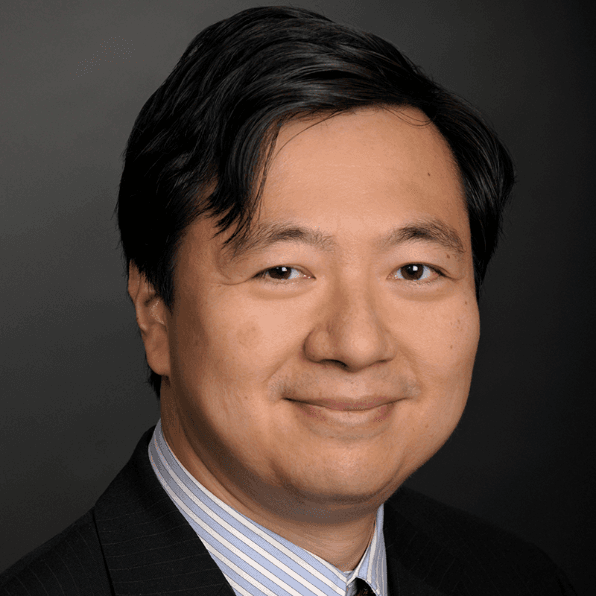
Thanks Mister Rohit. It's a great pleasure to have this opportunity talking to your audience. And so, I originally came from Shanghai, China and I actually spend almost all my time there before I came to the US in 1997. And in the US, I first lived in Philadelphia, during my PhD years at the University of Pennsylvania and then I lived in various cities in Dallas, Texas after graduation. Unlike some of my colleagues I haven't moved around a lot. And in terms of my interest, I will say I enjoy watching documentaries and reading articles and papers on Science and Technology. And then they are not necessary in my research field but generally I like understanding new advances in science and technology. And the reason I like watching documentaries is that documentaries always enrich my knowledge and which I think it's fascinating in this world that there’s so many things that I don't know.
So, I think our department. I think you're asking about the bachelor program in our department right. So, our department offers two bachelors program, one is the Bachelor of Science in Business Data Analytics and the second is the Bachelor of Science in Computer Information Systems. The first one, we call the BSBDA program and the goal is to help students learn ways to create large scale business data solutions and for in addition, large or small. And in today’s age, in any organization, asking on really huge amount of data and so the question is that how companies can leverage this data and they need help from students from this program. And then the BSCIS program that’s the second bachelor program, and it focuses on more traditional role of information system that is about designing and building information systems that support business operations and the management or decision making and so, I think that the top programs are quite complimentary. And the type of job that people in the first program, the BSBDA program they typically get after graduation is I would say, the typical work would be Business Data Analysts, Data Quality Analysts, Forecast Analysts, Supply Chain Analysts, Marketing Analysts. So essentially, you will see a lot of these jobs are related to data analysis for different business functions. And the type of job that the student in the second program, the BSCIS program, and that the title they typically receive upon graduation would be System Analysts and huge supports in System Administration, Website and E-commerce Development and System Assurance, Software and Application Development, and Database Administration and etcetera. You also asked about the graduate programs, they’re also very similar to our undergraduate program setting. We also have a graduate program (a specialized graduate program) where in Business Analytics we called MSBA and the other is in Information Management. So, the two areas are very similar to the undergraduate level except of course they are all mostly senior level management and the position that they get upon graduation are more in the managerial. So, they will be managers, Assistant managers and the let say the E-commerce managers and the Database managers for the MSIM students and then they will be the Business Analysis managers and the various type of Marketing managers, Supply Chain managers and Industries’ managers that’s in the MSBA program. Yes, I think this is a really good question that actually we did pay quite some attention at the department in terms of the diversity of the students in the program. And so, I think for the MSIM as well as for the BSCIS program, those programs are a little bit more male dominant compared to female students. But interestingly for the Analytics program, both at the undergraduate level and at the graduate level, I think we are now at a much more balanced level. I will not say equal portion of female versus male students, but I think, it’s close to 50-50. And I think what we have done is actually is we at the department, we had quite a bit of reach out program especially with local high schools and high schools in the State of Arizona. So, we run different summer camps, hackathons to encourage them to participate and also to let them know that it is a good experience and what they learn is definitely very useful. And what also helps is that the tools today for both analytics students as well as for the CIS students the tools had advanced so much that it actually is rightfully easy to use compare let’s say 10 or 20 years ago what kind of program tools or what kind of an analytics tools we have. So once students, they gain some experience, they use the tools and of course including auto-visualization. And we did see that it's not all about the mass of coding and it’s more about the conceptually high understanding the problem, how you design a way to solve the problem and then how to apply the right tool. Once they got the conceptual approach to write and I think they really enjoyed experiments and for both male and female students they realize they can do it.
So that’s a very good question. My research interests obviously had evolved over time. But I would say very broadly that I have always been very interested in ways technology addressed information asymmetry in different settings. So, information asymmetry that could be a little bit of obscure term but essentially, it says that when you have multiple people, they interact strategically which means that each player or each agent had different incentives and that they do not necessary want to reveal all the information to the other parties and that creates what’s called information asymmetry. So, you know something your competitors or your clients, your customers may not know. And so, my general research interest is in understanding how technology can play a role in this process and it could be in organizations, it could be e-commerce side but more recently my interest is more in online platforms. So, these platforms, we actually have seen lots of these platforms in today's date and age and that platform could be related to finance, for example, peer to peer lending is a very typical platform. It could be related to healthcare and actually one program that I’m working, actually multiple projects I’m working on is currently related to online platform between patients and doctors. And these platforms could be traditional E-commerce platforms like eBay and so actually you look around, of course, today we have the sharing economy like Uber and the Lyft, they are both platforms that’s connecting basically drivers to passengers. So, what we see is that increasingly our world is mediated by different kinds of platforms. And then my interest is in understanding how technology as well as the design of this platforms can address information asymmetry. And that so the ultimate goal is that to make sure the matching, to improve the matching to improve the efficiency of the overall platform.