
This is software (AWS) generated transcription and it is not perfect.
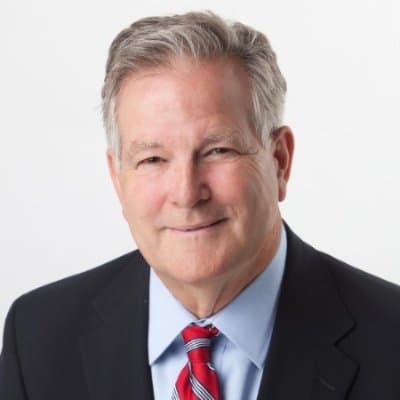
I was born and raised in the United States in the southern part of the country in Louisiana. New Orleans is the best known city. I grew up about a hundred miles from there and spent all of my early years in Louisiana and Texas and then spent two years as a sort of in the middle of my college years in and around London. I was a missionary for the Mormon Church. And so, that was a great experience. And then came back, finished school. I'm a southerner although I've been in the west mostly forty years, but I still like southern culture, southern food and southern football which leads us to my interest in things. So, like any good southener, I like American football. I like to watch a lot of sports. So, I follow basketball pretty closely. I follow soccer a little bit. Cricket, I'm still trying to figure out, but I have been by the Lord's cricket ground several times and one of my goals is to go watch a match there some time. So, I'm pretty broad in that regard. I do a lot of reading especially politics and history and of course, read a lot in my discipline and one of the great things about my career is it really merges my personal interests with my professional interests. So, for me, it's very enjoyable just to spend a lot of time reading about my discipline. And now that I'm in administration, I enjoy that even more I think. So, I spend a lot of time with family. I have a large family -- six children, fourteen grandchildren -- and that's a great joy at this point in my life.
I just came back from a meeting this morning of our advisory board for the university and several of our board members commented to me how many things we have that go on in the business school. And so, it's really difficult to summarize it. We have an undergraduate program that has I believe about six or seven majors ranging from entrepreneurship which is a relatively small major to accounting and finance which are two largest majors. Operations is a fairly large major. Information System is a large major. And the jobs students receive vary somewhat from major to major and perhaps, it might be a little bit different. Utah is a place that has a thriving economy, but it is not the home to any large corporations that I can think of. So, there area very few employers that have more than maybe two thousand employees might be the largest employer other than the universities in the state. I believe the University of Utah, not counting the Utah State Government, is the largest employer in the state. So, our students go to a lot of mid-sized companies and smaller companies. We probably have maybe twenty-five, thirty percent of our students take jobs out of the state of Utah which is I think a fairly good number. On the graduate program side, we have again a lot of complexity. We have four different MBA programs, a regular day program, an online program, a professional program that starts in the evenings and an executive program that is taught every other weekend. We have... I'm not even sure. I haven't counted them. But we have several one-year masters programs. We have the MS in information system which is probably our biggest program along with MS in finance, the master of accounting program is just a short distance behind, we have a master in real estate development and then a masters program in analytics. I'm not exactly sure what the formal name of that program is. So we really like the one-year programs like they give undergraduate students a deeper specialization as they got into the job market and we think they really help accelerate their careers a great deal. And then I think in many cases, we expect many will go and get an MBA at some point. Perhaps, not at the University of Utah necessarily but if not at Utah, somewhere else. So again, Utah has a very thriving technology sector both in the biomedical side and then of course on the information technology side. There's an area not too far from where I live that's been nicknamed Silicone Slopes which has a lot of sort of startups, mid-sized fast growing companies and from what I understand, they're hiring quite a few of our graduates, but they go to a very diverse set of employers.
So, that's a great question. I started out teaching business competitive strategy. It's sort of my you know primary class but I have a masters degree in organizational behavior. I graduated from a program at UCLA that was organization and Strategic Studies. And so, in the beginning I came and I taught both organizational behavior and strategy. That lasted about ten years and I gradually focus more on just strategy. I occasionally taught in elective in organizational theory and design. I taught quite a few doctoral seminars and really the first 20, 25 years of my career, I probably taught one every year. And that was generally either just the sort of organizational side of strategy, occasionally the general strategy class and then in recent years, I have started teaching a leadership class that is really leadership for we call it basically strategic leadership. It's dealing with leadership issues at the firm level, setting the direction for the overall firm or large unit within a firm, how to manage change, how to implement strategy, and that's been a lot of fun. In terms of my philosophy, I was heavily influenced as a master student by a couple of professors I had, who had spent their early part of their careers as Harvard professors and were deeply ensconced in the case method of teaching, and I also was mentored by a faculty at UCLA who are also much more in terms of the case method. So, and the primary philosophy behind the case method is that particularly when you're dealing with general management issues, there are a lot of competing concerns. So, competing concerns can be function versus function. Something that maybe great from an operation's standpoint isn't great from a marketing standpoint or vice versa. And it's not a question of solving a simple functional problem. You have to look at how the things interact and so judgment becomes a critical factor. And the case method, when done well, helps students really practice their judgment and gives them a lot of feedback on their reasoning and their thinking in a very low threat environment. So, I guess there's two or three things that really characterize what I teach. I usually have a few core conceptual frameworks that I want them to really, really understand well and I want them to be able to apply it and so they'll get a lot of practice applying those frameworks. There's a tremendous emphasis put on their participation and preparation in class. And so, I weigh participation quite heavily and the idea there is I want them to prepare very intensely with the idea that more intensely they prepare, the more they'll learn in preparation and the more they'll learn from their classmates who have also intensely prepared. And the other thing that I usually try to do in a class is I usually try to have them do some sort of project which will give them a chance to really apply and integrate what they're learning in a very unstructured format where they have to sort of figure things out. So, my philosophy on teaching evolve very early. If anything, it is hard for me to maintain I think the discipline I had when I was younger and didn't know as much. Now, the temptation is I've read a lot, I've seen a lot more, and I have to really fight the urge to try and share too much of my wisdom and learning and I think sometimes I may interfere with the process where the students really have to work to discover for themselves.