
This is software (AWS) generated transcription and it is not perfect.
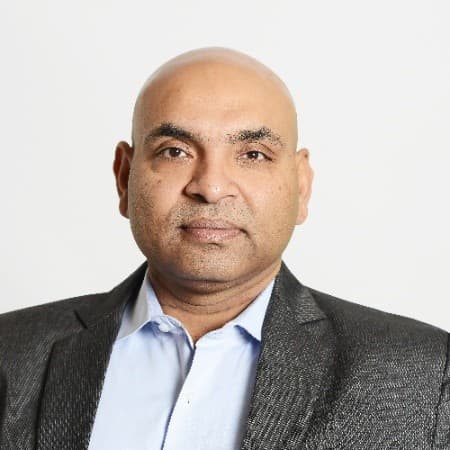
This is a loaded question. Who knows where we all came from? I was born in India. I did my bachelors from there and then I immediately came to the US at the age of twenty one. My childhood was spent in different places because my father was in a transferable job. Even in the United States, I have lived in many different places. I came for my Masters to Penn state which is in Happy Valley in Pennsylvania, like in the middle of Pennsylvania. I moved to Purdue for a few years, in West Lafayette. Then I was in Austin, Texas. I've lived in Boston for a few years, then Connecticut and various other places for 3-4 years. For the last seventeen years, I've been in the Twin Cities, Minneapolis, St Paul area. I live in a suburb called Eden Prairie which is one of the western suburbs of Minneapolis.
The Bachelor's program has a variety of phases. We offer majors in a variety of different areas in the business school. At Minnesota, students join the business school in the freshman year. They take general ed classes but they're a part of the business school. There are ten majors. But I guess you will be more interested in MIS program, so I'll talk about the MIS major. MIS major prepares students essentially for a business analyst kind of role. However, there are enough electives in specific areas, for example, if you're interested in security, auditing or analytics, there are a variety of different electives that you can take to gain more in-depth knowledge in those areas. Minneapolis has about seventeen or eighteen Fortune 500 companies, and many other mid sized and smaller companies that work with these companies. Most of our students get absorbed in these companies. There is a huge variety in the kinds of company, form healthcare to consumer staple to retail to companies like General Mills to food infrastructure companies. All of them need people in information systems. Many of our students who are interested in more analytics oriented areas may go to companies like Optum which is the United Healthcare's analytic division. There are other students who go to companies like Metronic or General Mills or Best Buy or Target. Our students, specifically the ones enrolled in MIS majors, have been getting, in the past few years, on an average three job offers and the average salary is the highest in the business school at this point in time. In terms of the graduate programs, we have a Masters in Analytics program which started about four years back. That program also has a hundred percent placement rate and students from this program go all over the country. A large majority are still absorbed in the Twin Cities area among these companies but many of the students go to companies like Amazon or Capital One, Expedia and all companies that need people with analytical skill-set. Our analytics program is an intense program and it's a very comprehensive program. When we think about analytics, we don't think about just statistics or machine learning. For us, Analytics is every analytical methodology that one can employ to solve problems, which not only includes statistics and machine learning but also econometrics, analytical modeling, simulation, operations research, and AB testing. It's a very comprehensive, very intensive program. Students do forty five credits in one year. They don't have any time to do anything else, except to study and perform.
The best way to describe my research is to call it the economic engineering of systems. I'm interested in designing interfaces among different entities that use information systems to enhance economic value. While traditionally, most designs of systems consider system performance in terms of availability, up time, usage, those kinds of things which come under computer science metrics, my interests have been to design systems that increase economic efficiency of transactions. That has been one constant in my research, although, I have a very broad set of research experiences that expand to many different domains and areas.Some of the major research projects, starting from my dissertation, were that on what is now called net neutrality. Way before its time, I worked on problems associated with free network. Some of my research designed optimal mechanisms to allocate bandwidth and it was a very early work but it laid the foundation for a lot of work that is going on now.Another large area that I have worked on is what I can loosely term as online auctions. Although I haven't done much work on the auctions themselves, but I tried to design the online versions of these trading mechanisms so that their efficiency is optimized and we can create win-win kind of situations where both, sellers and buyers, can benefit. I also try to understand how does the behavior of people change with respect to the change of rules in the game.Some of the most interesting insights of my work has been that while our theoretical results seem to suggest that people should behave in a certain way, people don't behave in those ways in actuality. Now that might not be that surprising but what is surprising is that they do behave in a very stable set of ways. Even when rules are changed dramatically, it may be that the proportion of people behaving in one way or the other changes but broadly people behave, at max, in three or four different ways. People either put very little effort into doing things or they put a lot of effort. Or they might just watch people and then decide how to behave and other people just keep on participating in these online mechanisms to hope and learn from their own mistakes. These type of behaviors are common regardless of what type of interaction mechanism we are looking at. Even non transactional behaviors are very similar. It's a surprising thing that while there is no one way but there is a stable taxonomy of behaviors that people seem to follow regardless of the rules.The interesting part is how changing the rules changes the proportion of behaviors and so on. So that is also an outlook on different types of outcomes in terms of how much revenue can be generated or how much efficiency the mechanism generates. I have lots of other different projects. Most of the current interesting projects have more to do with societal problems from working in the areas of power grid management, electrical vehicles, various sources of energy and things like that with businesses and companies that directly affect them.